
What Is Intermodal Shipping? Benefits and Tradeoffs
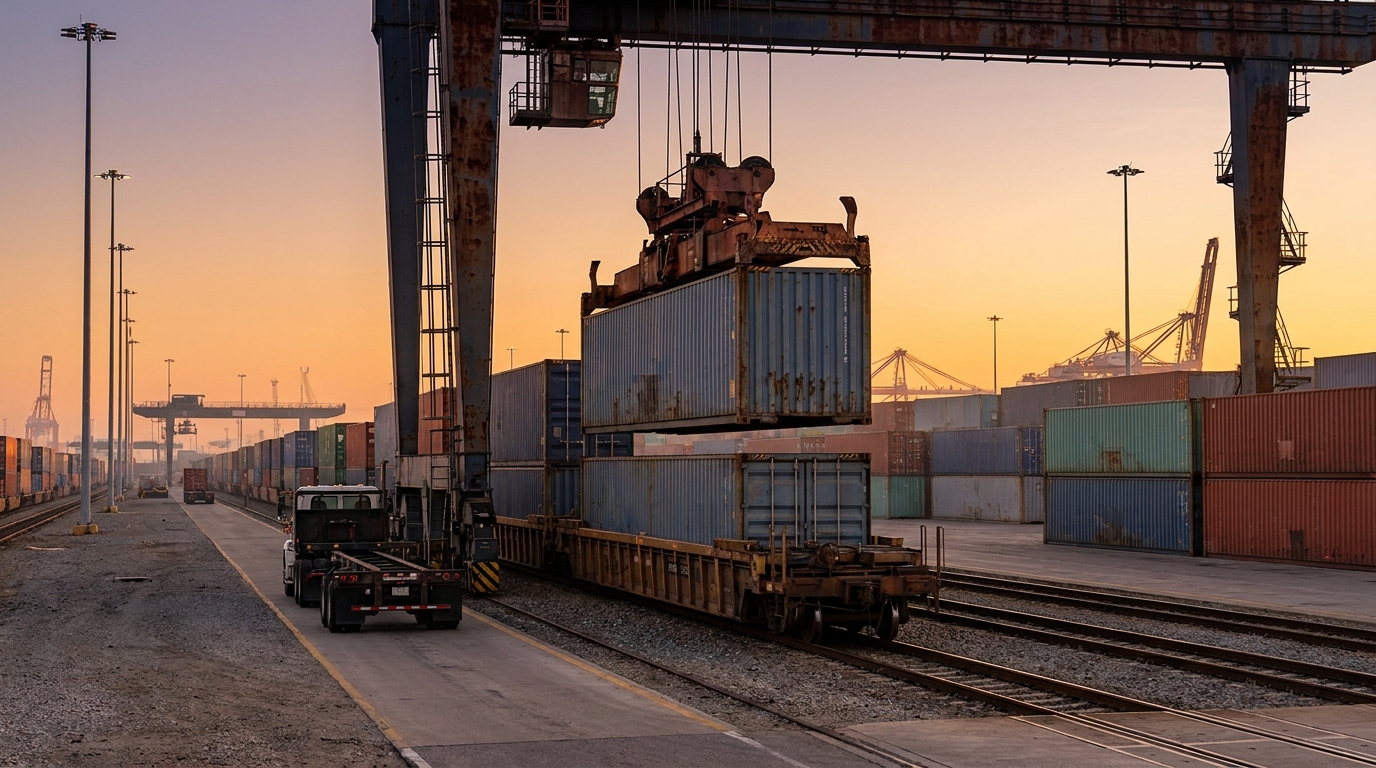
Intermodal shipping is moving freight inside one sealed container across two or more transportation modes, most often truck to rail to truck, without ever unloading and reloading the goods themselves. The container is lifted between a truck chassis and a rail well car at each ramp, but the pallets inside are handled only once at origin and once at destination. That single detail is the whole point: you get rail economics on the long middle of the trip while keeping truck flexibility at both ends, and the freight rides untouched the entire way.
Key takeaways
- Intermodal means one container, two or more modes, with the freight itself handled only at the start and end of the trip.
- A typical move is drayage to the origin ramp, rail linehaul in the middle, then drayage from the destination ramp to the receiver.
- It usually wins on cost and capacity on longer lanes, and it burns less fuel per ton-mile than trucking.
- The tradeoffs are longer and less predictable transit time, dependence on ramps being reasonably close, and reliance on drayage capacity at both ends.
- Intermodal fits high-volume, time-flexible freight on lanes roughly 700 miles and longer between markets with good rail ramps.
- What is intermodal shipping?
- How does an intermodal move actually work?
- Domestic vs international intermodal: what is the difference?
- Intermodal vs transload vs over-the-road truckload
- What are the benefits of intermodal shipping?
- What are the tradeoffs and risks?
- When does intermodal make sense?
What is intermodal shipping?
Intermodal shipping is freight transport that uses a standardized container to move between modes, so the box changes vehicles but the cargo does not change hands. The defining feature is that the freight is not handled when it switches mode. A crane or reach stacker moves the whole container from a truck chassis onto a rail well car, the train hauls it, and another lift puts it back on a chassis for final delivery.
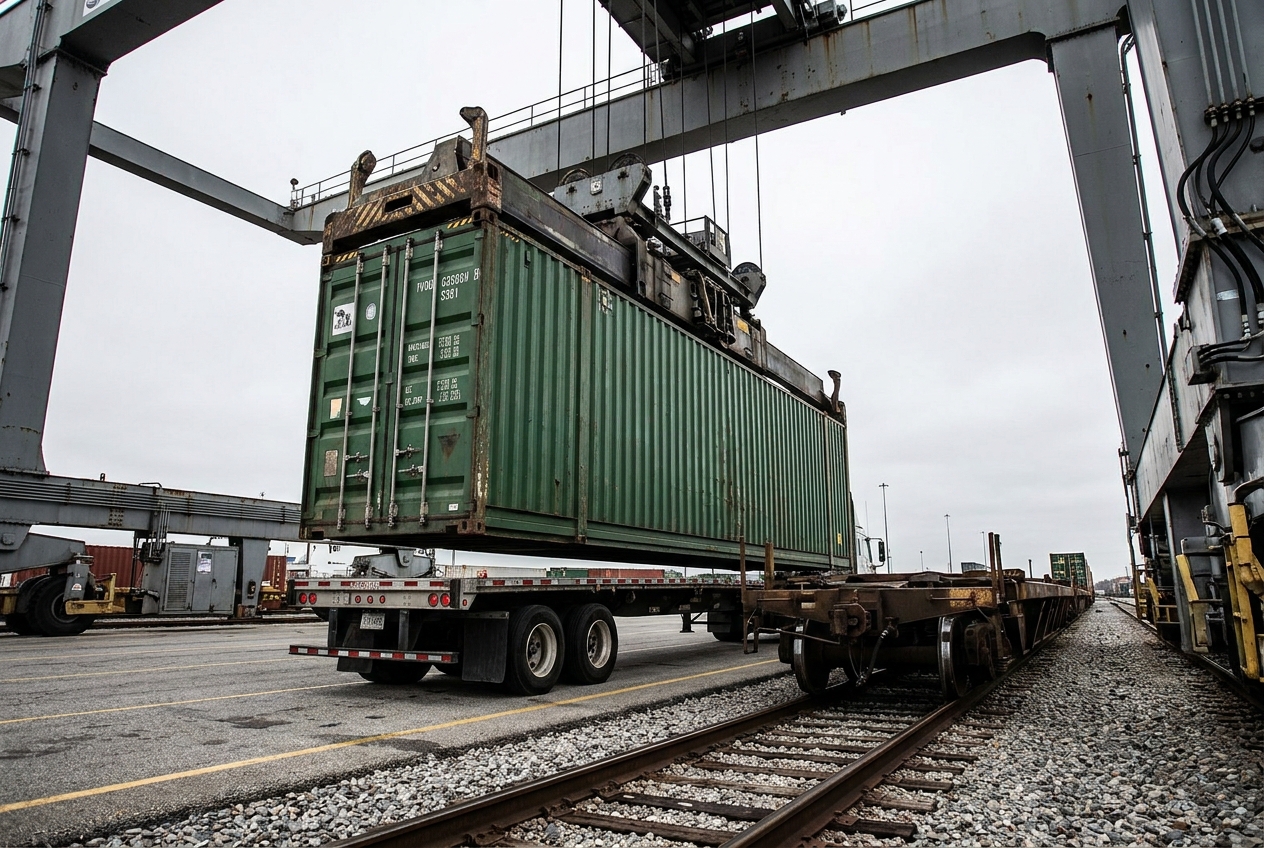
Because the goods stay sealed inside one container the whole journey, intermodal reduces the damage, theft, and labor exposure that come from unloading and reloading, and it lets carriers combine each mode's strengths: trucks for the flexible short legs, rail for the efficient long haul. Every intermodal move depends on drayage, the short-haul trucking that connects your dock to the ramp.
How does an intermodal move actually work?
A standard domestic intermodal move has three legs: drayage to the origin ramp, rail linehaul in the middle, and drayage from the destination ramp to the receiver. Knowing the legs is the fastest way to price a shipment.
- Origin drayage. A local truck delivers the loaded container to the nearest intermodal ramp before that day's cutoff time.
- Rail linehaul. The container is lifted onto a well car, often double-stacked, and the train carries it across the long middle of the lane between ramps. This is where the cost and fuel advantages come from.
- Destination drayage. At the destination ramp the container is lifted back onto a chassis and a local driver hauls it to the receiver.
The ramp cutoff and train schedule are what shippers most often underestimate. Miss a cutoff and your box waits for the next departure. Use the container load calculator to confirm your pallets fit the box efficiently before you commit, since a poorly loaded container wastes the space you are paying to move.
Domestic vs international intermodal: what is the difference?
Domestic intermodal uses 53-foot containers sized to U.S. truckload dimensions, while international intermodal uses smaller ISO ocean containers, most commonly 20-foot and 40-foot boxes. The distinction matters because the equipment, the cubic capacity, and the handoffs are different.
Domestic intermodal is essentially a rail substitute for a 53-foot dry van on an inland lane, so the container holds roughly what a standard truckload holds. International intermodal starts at a port: an ISO ocean box comes off a ship, moves inland, and is often transloaded into a 53-foot domestic container, since consolidating smaller ocean boxes into fewer 53-foot units cuts inland cost. If your freight originates overseas, expect that handoff somewhere in the chain.
Intermodal vs transload vs over-the-road truckload
These three terms describe different things and shippers mix them up constantly. Intermodal keeps one container across modes with no rehandling. Transloading physically moves freight from one container or trailer into another. Over-the-road (OTR) truckload keeps the freight on a single truck for the entire door-to-door trip.
In practice you often combine them: an ocean container arrives, gets transloaded into a 53-foot box, and that box moves domestic intermodal inland. The right question is not which label applies but which pattern gives you the cost, speed, and reliability your shipment needs. The table below compares the two modes shippers weigh most often, intermodal and OTR truckload.
| Factor | Intermodal (truck-rail-truck) | OTR truckload |
|---|---|---|
| Cost on long lanes | Often lower per mile as distance grows | Higher per mile, driven by driver hours and fuel |
| Transit time | Longer, plus ramp cutoffs and train schedules | Faster and more direct door to door |
| Best lane length | Roughly 700 miles and up between good ramps | Short and medium lanes, or ramp-poor regions |
| Flexibility | Tied to ramp locations and rail network | Point to point anywhere trucks can drive |
| Schedule reliability | More exposed to weather and rail service swings | More predictable, subject to driver availability |
What are the benefits of intermodal shipping?
The core benefits are lower cost on long lanes, access to a different pool of capacity, and better fuel and emissions performance per ton-mile. Rail is efficient at moving heavy freight long distances, so on the right lane intermodal can undercut truckload pricing while reducing your dependence on the truckload market.

Capacity is an underrated advantage: when truckload capacity tightens, intermodal gives shippers a second lever to move volume. On emissions, the U.S. Department of Transportation's Bureau of Transportation Statistics tracks freight across modes, and rail is generally recognized as more fuel-efficient per ton-mile than long-haul trucking. You still need reliable trucking at both ends, so browse intermodal and rail providers alongside drayage carriers when you build a lane.
What are the tradeoffs and risks?
The main tradeoffs are longer and less predictable transit, dependence on ramp proximity, reliance on drayage at both ends, and exposure to weather and rail service variability. None are dealbreakers, but each is a real planning constraint.
Transit time is the big one: ramp cutoffs, train departure windows, and two drayage legs add steps that a single truck avoids. Ramp proximity is next, because if your origin or destination sits far from a ramp, the drayage cost and time can erase the rail savings. Drayage dependency follows, because a shortage of local truck capacity near a ramp can strand an otherwise cheap move. Finally, rail networks are more exposed to weather, congestion, and service swings than a single truck, so build in schedule buffer for anything time-sensitive.
When does intermodal make sense?
Intermodal fits high-volume, time-flexible freight on longer lanes, roughly 700 miles and up, between markets with good rail ramps on both ends. The more of those conditions you hit, the stronger the case.
Consider a shipper moving 20 full containers a month of durable, non-perishable goods from a Southern California distribution center to the Midwest. The lane is long, the freight is not urgent, and both metros have busy ramps. Domestic intermodal there can lower cost per load versus OTR truckload and add capacity during tight markets, in exchange for a day or more of extra transit and tighter attention to ramp cutoffs. Flip any of those facts, say the freight is perishable, the lane is 300 miles, or the destination has no nearby ramp, and OTR truckload usually wins. Before you switch a lane, ask a candidate carrier the same hard questions you would ask any provider, covered in our guide on the questions to ask a long-haul trucking company, and benchmark intermodal against a straight truckload option using our LTL vs FTL shipping guide.
Frequently asked questions
What is intermodal shipping in simple terms?
Intermodal shipping is moving freight inside a single sealed container across two or more modes, usually truck then rail then truck, without ever unloading and reloading the goods themselves. The container is transferred between a chassis and a rail well, but the freight inside is handled only once at origin and once at destination.
What is the difference between intermodal and transloading?
In intermodal the same container travels the whole trip and the freight is never touched in transit. In transloading, freight is physically unloaded from one container or trailer and reloaded into another, often to move goods from an ocean box into a domestic 53-foot trailer or to consolidate shipments.
Is intermodal cheaper than trucking?
On long lanes, roughly 700 miles and up, intermodal is often cheaper per mile than over-the-road truckload because rail linehaul is fuel-efficient and less exposed to driver-hour limits. On short lanes the drayage moves at each end can erase the savings, so the advantage grows with distance.
How much longer does intermodal take than a truck?
Intermodal usually adds transit time versus a team or single-driver truckload, often a day or more on comparable lanes, because of ramp cutoffs, train scheduling, and drayage at both ends. Treat published transit times as targets that weather and rail service can push out.
What is drayage in an intermodal move?
Drayage is the short-haul trucking that carries the container between a shipper or warehouse and the nearest rail ramp or port. It bookends every intermodal move, and reliable drayage capacity near both origin and destination ramps is often what makes or breaks the shipment.
What size containers does intermodal use?
Domestic intermodal typically uses 53-foot containers matched to U.S. truckload dimensions. International intermodal uses ISO ocean containers, most commonly 20-foot and 40-foot boxes, which hold less than a 53-foot domestic container and often get transloaded into a 53 for inland moves.
Ready to compare providers?
Search the directory by service and location, save options to your shortlist, and send a clear RFQ.
Related guides
How to Choose a Freight Broker: A Shipper Guide
A shipper's guide to choosing a freight broker: verify FMCSA authority and the BMC-84 bond, check insurance and carrier vetting, ask the right questions, and spot red flags.
Detention and Demurrage Explained for Shippers
Detention and demurrage are separate late fees on containers and equipment; here is what each one means, how free time works, and how to cut them.
Accessorial Charges Explained: LTL Fees to Expect
A plain-English guide to accessorial charges in LTL freight: what each fee means, what triggers it, and how to keep surprise charges off your invoice.