
What Is Transloading and When Do You Need It?
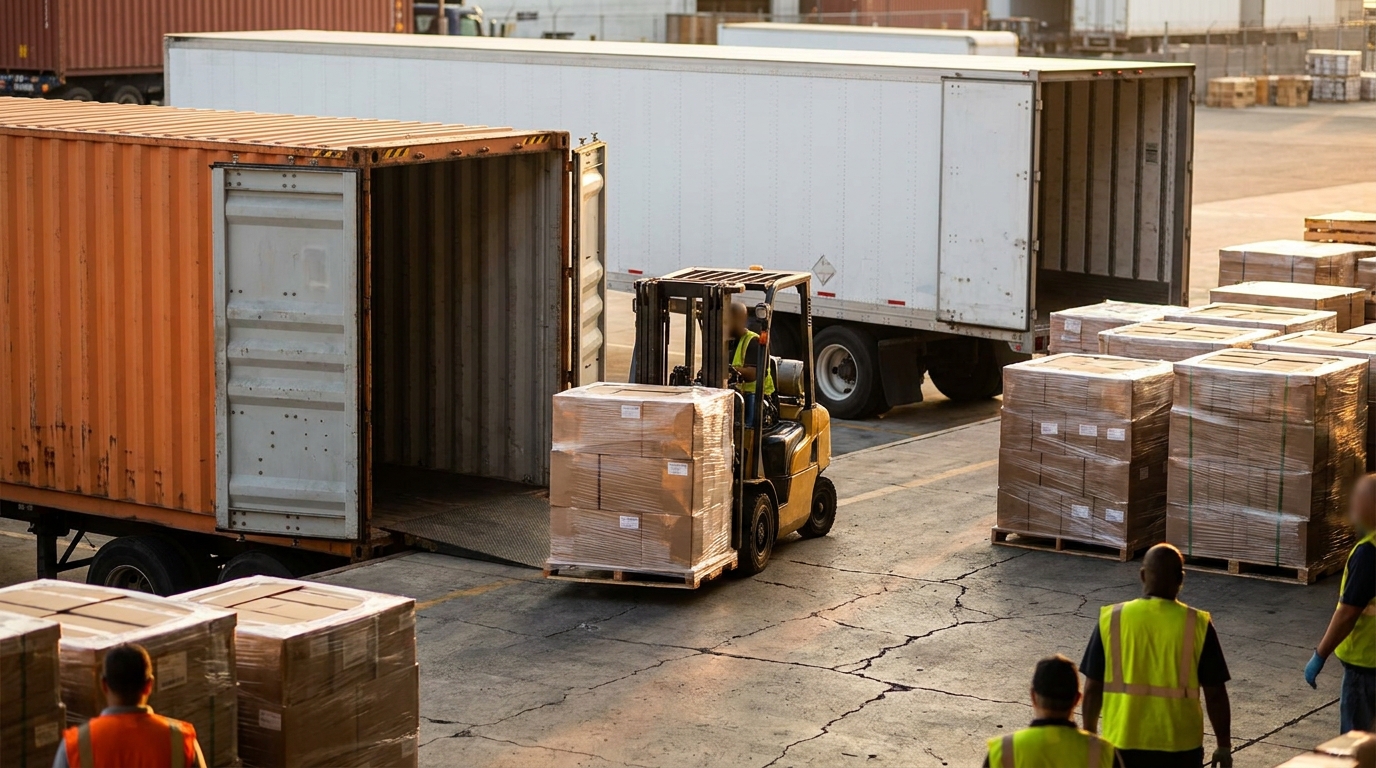
Transloading is the process of transferring freight from one shipping container or mode into another, most often unloading an imported ocean container and reloading the goods into a 53-foot domestic trailer or onto rail. It frequently includes deconsolidating one big inbound load into several outbound shipments, consolidating many into fewer, and palletizing freight that arrived floor-loaded.
Key takeaways
- Transloading transfers freight from ocean containers into domestic trailers or rail cars, usually near the port of entry.
- Its biggest wins are fitting more cargo into fewer domestic trailers and returning ocean equipment fast to stop per diem and detention charges.
- It differs from cross-docking, which restacks pre-sorted freight dock to dock, and from drayage, which is only the short truck move.
- Cost is driven mostly by labor, whether freight is floor-loaded or palletized, and how long cargo dwells at the facility.
- Shipping the container inland whole is often better for short port-to-destination hauls or sealed, high-security loads.
- What is transloading?
- Transloading vs cross-docking vs container-direct
- Why do shippers transload?
- How does the transloading process work?
- What drives transloading costs?
- When does transloading make sense?
What is transloading?
Transloading is the handling step where freight is taken out of one piece of equipment and loaded into another, changing container, mode, or configuration in the process. The classic move is at an import gateway: an ocean container arrives, gets a short truck trip to a warehouse, and the cargo inside is unloaded and reloaded into 53-foot trailers or a rail car for the long inland leg.
Ocean and domestic equipment are sized differently. A 40-foot ocean container is built for ships and port cranes, while a 53-foot trailer is the workhorse of the U.S. highway network. Transloading lets you use each mode's most efficient equipment instead of dragging the ocean box all the way inland. It is routine in import supply chains and pairs closely with drayage and intermodal shipping.
Transloading vs cross-docking vs container-direct
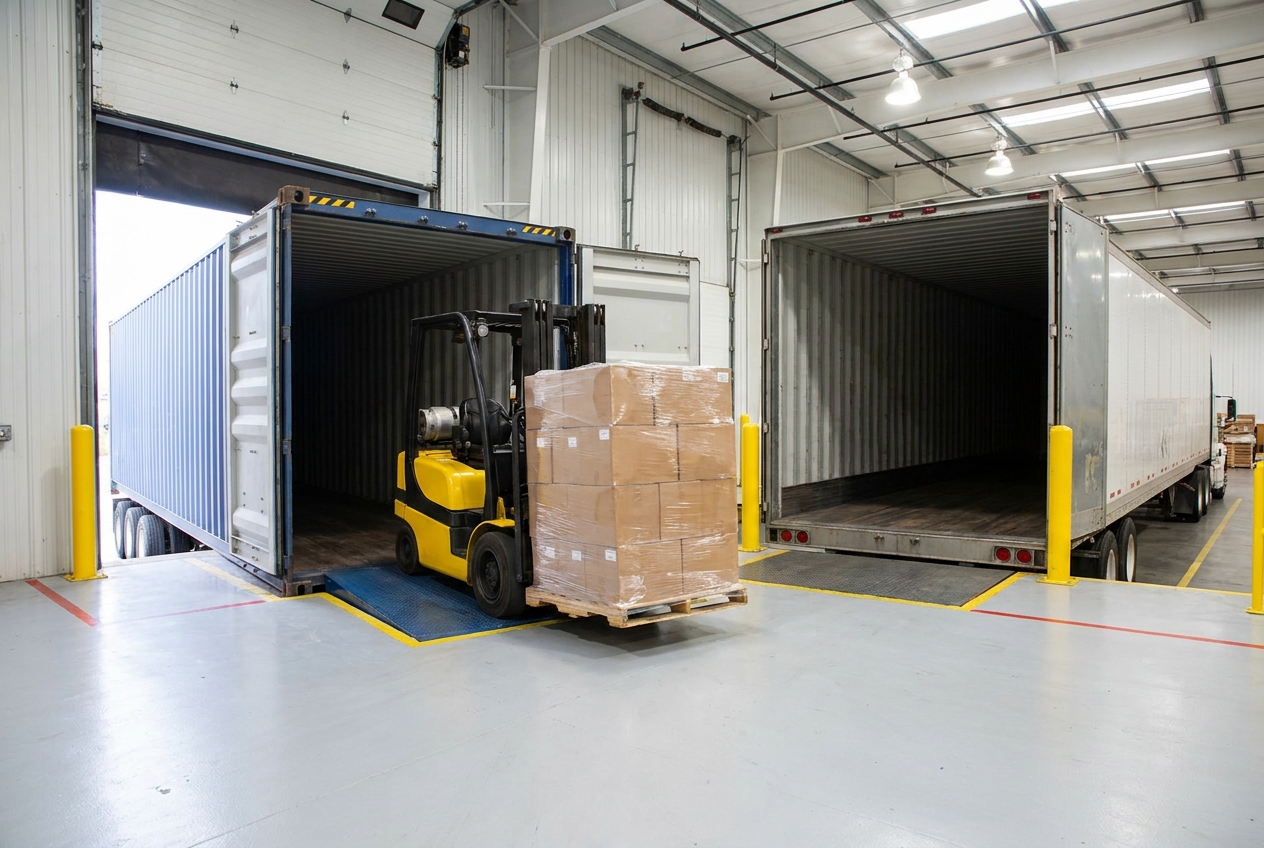
These three terms get mixed up constantly, but they describe different things. Transloading restacks freight between modes. Cross-docking flows pre-sorted freight from inbound to outbound with minimal storage. Container-direct skips the handling entirely and hauls the sealed ocean box to its final destination.
| Approach | What happens | Freight is | Best for | Main cost driver |
|---|---|---|---|---|
| Transloading | Cargo unloaded from the ocean container and reloaded into domestic trailers or rail | Restacked, often consolidated or palletized | Long inland hauls, consolidating or deconsolidating, avoiding ocean per diem | Labor and dwell time |
| Cross-docking | Pre-sorted freight moves inbound dock to outbound dock, little to no storage | Kept on its existing pallets, sorted by destination | Fast distribution of freight that is already palletized and sorted | Sort complexity and throughput speed |
| Container-direct | Sealed ocean container drayed and hauled to the final destination whole | Untouched inside the original container | Short port-to-door hauls, sealed or high-security loads | Drayage plus per diem if the box dwells |
The simplest way to remember it: drayage is the short move, transloading is the handling, and cross-docking is a lighter-touch handoff that does not usually change the container the freight rides in.
Why do shippers transload?
Shippers transload to save money and time on the domestic leg and to free up ocean equipment quickly. The reasons stack up fast for import-heavy supply chains.
- Fit more cargo into fewer domestic trailers. A 53-foot trailer offers meaningfully more floor and cube than a 40-foot container, so consolidating loads cuts the number of long-haul trailers you pay for.
- Avoid per diem and detention on ocean equipment. Ocean carriers charge for holding their containers and chassis past the free time. Emptying the box near the port and returning it stops those meters. See our guide to detention and demurrage for how those charges accrue.
- Push freight inland by rail. Transloading into a domestic container or rail car lets long hauls ride intermodal rail, which can beat over-the-road on the right lanes.
- Consolidate or deconsolidate. Several import containers can be merged into fewer outbound trailers, or one mixed container split into shipments for different destinations.
- Palletize floor-loaded freight. Much ocean freight arrives hand-stacked to the ceiling. Transloading is the moment to put it on pallets so it moves through domestic docks and DCs efficiently.
The trade-off almost always comes down to handling cost now versus trailer and equipment savings later. The U.S. Bureau of Transportation Statistics tracks the freight modes these moves shift between.
How does the transloading process work?
The process is short but has several handoffs, each with its own timing and cost. A typical import transload runs like this:
- The ocean container clears the terminal and, once customs releases it, is drayed a short distance to a transload warehouse near the port.
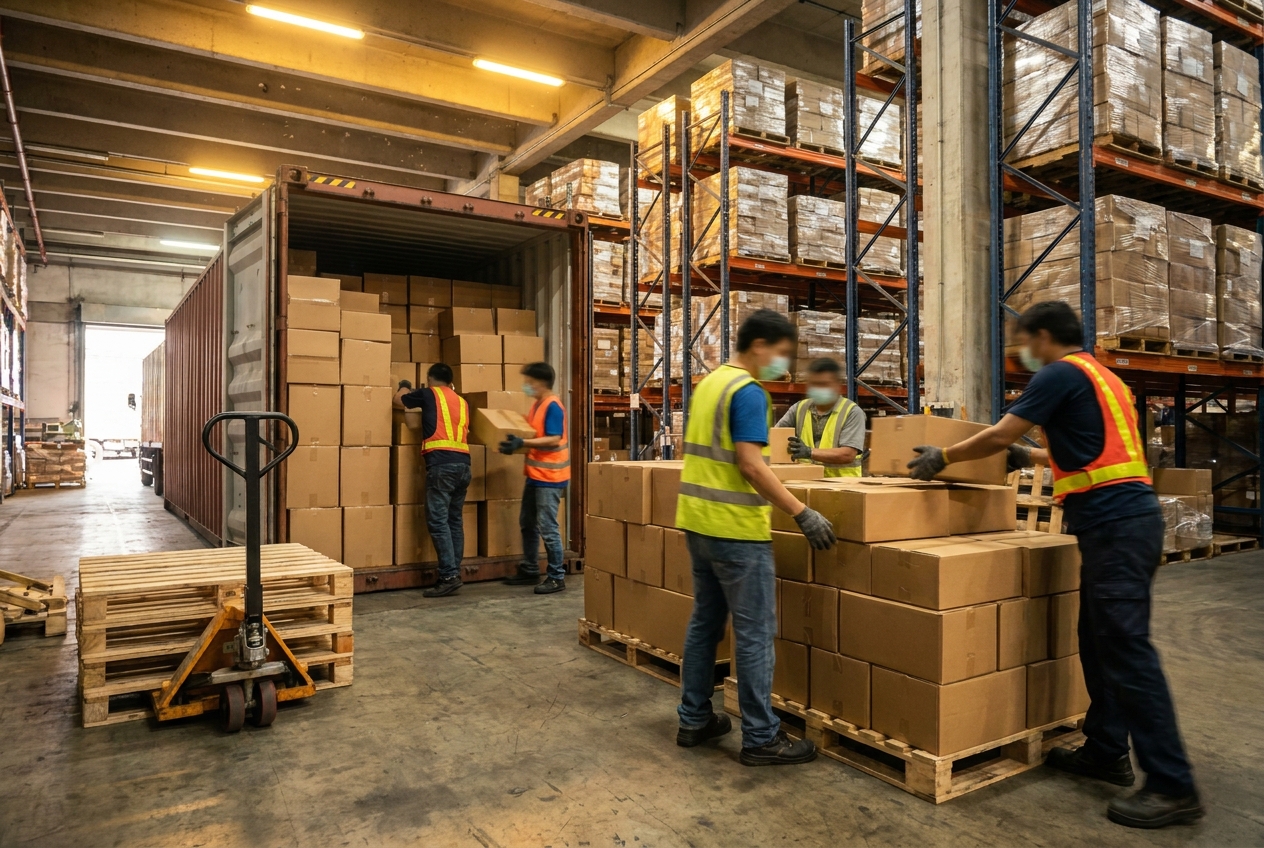
- Crews unload the container, often breaking down floor-loaded freight by hand and building it onto pallets.
- The freight is staged, counted, and sometimes sorted by destination or reconfigured for the outbound network.
- It is reloaded into 53-foot trailers, domestic containers, or rail equipment for the inland move.
- The empty ocean container and chassis are returned to the terminal to stop per diem.
Customs release governs when the box can move, so broker coordination matters. Our guides on the documents a customs broker needs and the customs broker versus freight forwarder roles explain that clearance step. Transload facilities are usually listed under warehousing and 3PL providers, and the short port move is handled by drayage carriers.
What drives transloading costs?
Transloading cost is driven mostly by labor, how the freight is loaded, and how long it dwells at the facility. Pricing varies widely by market and product, so treat any single number with caution and get a real quote.
- Labor and handling. Floor-loaded freight that must be hand-unloaded and palletized costs far more per container than freight that arrives palletized and moves with a forklift.
- Volume and cube. A tightly packed high-cube container takes more crew time than a light one, and heavy or oversized items slow the work further.
- Dwell and storage. Free time is limited, so cargo that sits waiting for outbound trucks or customs release can pick up storage charges.
- Value-added work. Sorting, labeling, palletizing, or repacking each add cost, but are often cheaper to do at the port than deep in your network.
To sanity-check how much you can actually consolidate before you commit, run the numbers through our container load calculator and compare the trailer count against shipping the box whole.
When does transloading make sense vs shipping the container whole?
Transloading pays off when the domestic savings beat the added handling cost and risk. Shipping the container inland whole usually wins when the haul is short or the load is already efficient.
Worked example. Say you import three 40-foot high-cube containers of floor-loaded consumer goods into a West Coast port, bound for a Midwest DC. Because a 53-foot trailer holds roughly 25 to 30 percent more floor space than a 40-foot container, those three ocean boxes often reload into about two 53-foot trailers. You empty and return all three containers within free time, avoiding per diem, and pay for two long-haul trailers instead of three. If the transload labor costs less than the saved trailer plus the avoided per diem, transloading wins.
Lean toward transloading when the inland leg is long, you are importing floor-loaded freight, you want to consolidate multiple containers, or you want to move inland by rail. Lean toward shipping the container whole when the destination is close to the port, the load already fills the container, the product is fragile enough that extra handling raises damage risk, or you need one sealed unit for security or a customs reason. Because customs status affects your options, confirm entry requirements with U.S. Customs and Border Protection before planning the move.
Whichever way you lean, price both paths for your actual lanes. Compare the all-in cost of transloading, drayage, and linehaul against a straight container-direct move, then choose the one that lands your freight for less.
Frequently asked questions
What does transloading mean in shipping?
Transloading is transferring freight from one transport container or mode into another, most commonly unloading an import ocean container and reloading the goods into a 53-foot domestic trailer or a rail car. It often includes deconsolidating or consolidating and can involve palletizing floor-loaded freight.
What is the difference between transloading and cross-docking?
Cross-docking moves already-sorted freight straight from an inbound dock to an outbound dock with little or no storage, usually keeping units on their existing pallets. Transloading physically restacks the cargo, typically from an ocean container into a domestic trailer or rail car, and often reconfigures how the freight is loaded.
How many 40-foot containers fit into a 53-foot trailer?
A 53-foot domestic trailer holds roughly 25 to 30 percent more floor space than a 40-foot ocean container, so shippers can often consolidate the contents of three 40-foot high-cube containers into about two 53-foot trailers, depending on how the freight cubes out and whether it is floor-loaded or palletized.
Does transloading help avoid per diem and detention charges?
Yes. Emptying an import container quickly and returning it to the terminal stops per diem and detention meters that accrue while you hold ocean equipment. Transloading lets you pull the cargo out near the port and move it onward in domestic equipment you control.
Is transloading the same as drayage?
No. Drayage is the short truck move of a container between the port, rail ramp, and a nearby facility. Transloading is the handling step at that facility where the freight is unloaded from the container and reloaded into other equipment. A transload almost always starts with a drayage move.
When should I ship the container inland instead of transloading?
Ship the container whole when the load already fills the container efficiently, the destination is close to the port, you want a single sealed unit for security or customs reasons, or the extra handling risk of a fragile product outweighs the trailer savings.
Ready to compare providers?
Search the directory by service and location, save options to your shortlist, and send a clear RFQ.
Related guides
What Is a 3PL? When Shippers Need One
A plain-English guide to what a 3PL is, the services it provides, how 3PLs price, and how to tell when a shipper should outsource logistics.
Section 321 De Minimis Changes: What Importers Should Do Now
US policy is narrowing the Section 321 de minimis exemption. Here is who is affected and the practical steps importers should take before the rules change.
What Documents Do Customs Brokers Need?
The documents customs brokers need usually include a commercial invoice, packing list, bill of lading or air waybill, importer details, product descriptions, country of origin, and any product-specific documents required for customs clearance. A broker can only clear a shipment as accurately as the information they receive, so importers should prepare these documents before freight […]