
LTL vs FTL Shipping: How to Choose
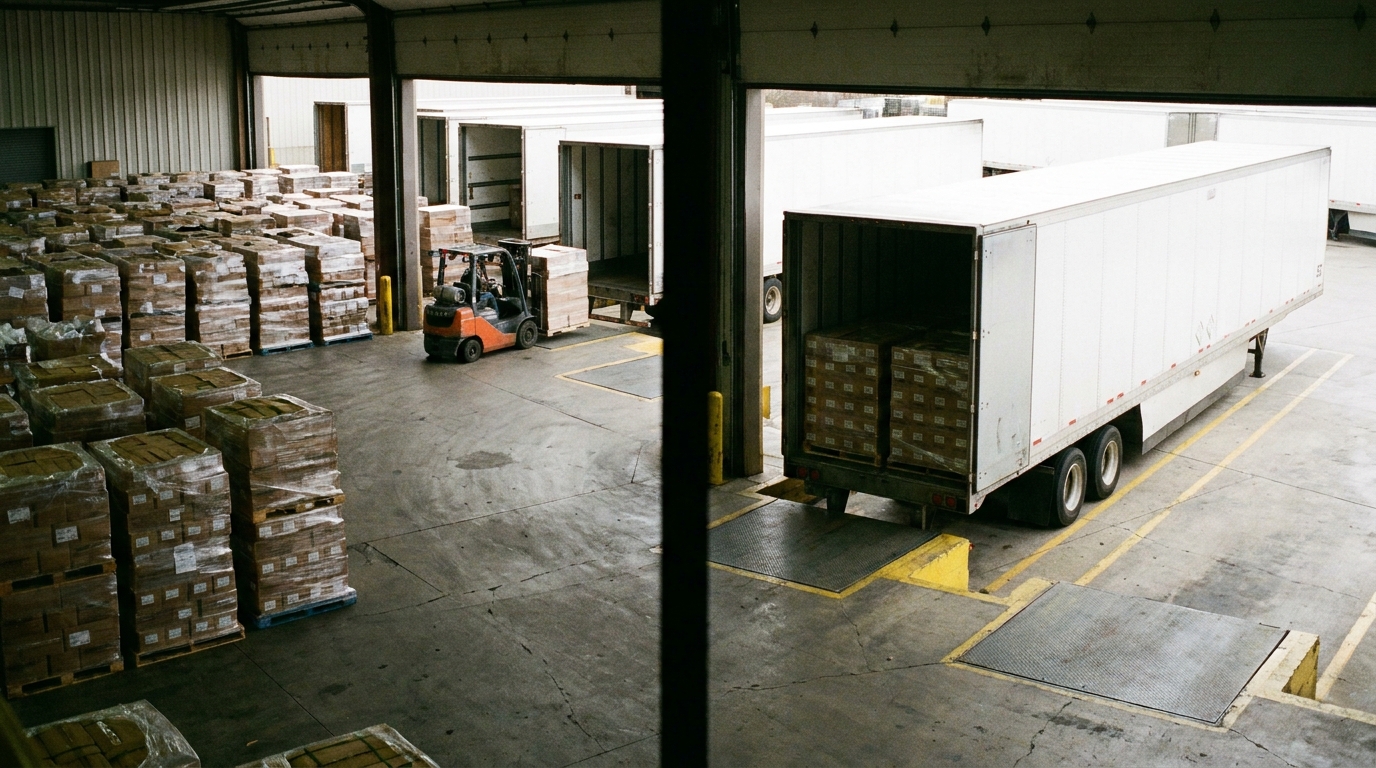
Choosing between LTL vs FTL shipping comes down to how much freight you are moving and how much control you need over timing and handling. LTL, or less-than-truckload, shares one trailer among several shippers and suits small loads. FTL, or full truckload (also called TL), dedicates an entire truck to your freight and suits large, urgent, or fragile shipments. A middle option, volume or partial LTL, covers the gap. This guide shows where each mode wins on cost, speed, and damage risk, with rough pallet and weight guidance you can apply today.
Key takeaways
- LTL fits small shipments, roughly 1 to 6 pallets or under about 12,000 to 15,000 lb, and is priced by freight class, weight, distance, and accessorials.
- FTL fits large, time-sensitive, or fragile freight, is quoted as a flat lane rate, and is handled far less because it loads and unloads once.
- Volume or partial LTL is the middle ground for shipments too big for standard LTL but not enough to fill a trailer.
- These pallet and weight numbers are rules of thumb, not hard cutoffs. When a shipment sits near the line, quote it both ways.
- LTL moves through terminals with multiple handling touchpoints, so transit is longer and damage risk is higher than a direct FTL move.
What is the difference between LTL, FTL, and volume LTL?
LTL (less-than-truckload) is freight that shares trailer space with other shippers' loads and is priced by freight class, weight, distance, and accessorial services. FTL (full truckload) dedicates one truck to a single shipment moving point to point at a flat lane rate. Volume or partial LTL sits between them: too large for standard LTL, not enough to justify a full trailer.
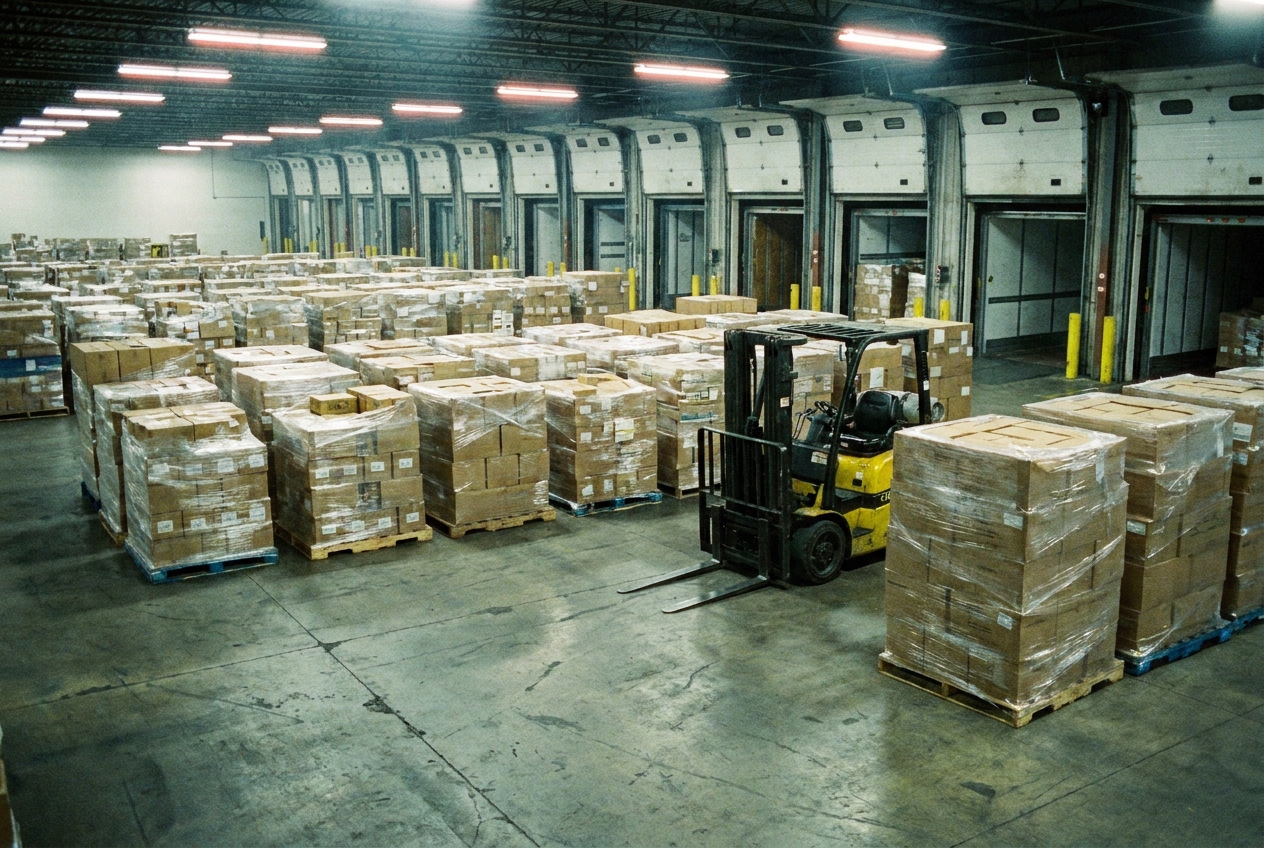
The practical distinction is how many times your freight is touched. LTL rides a hub-and-spoke network, so a pallet may be unloaded and reloaded at several terminals before delivery. FTL is loaded at pickup and stays on the same trailer until the destination. Volume LTL usually involves fewer terminal transfers than standard LTL.
When does LTL shipping make sense?
LTL makes sense for small shipments, as a rule of thumb roughly 1 to 6 pallets or under about 12,000 to 15,000 lb, where paying for a whole trailer would waste space and money. If your freight is well palletized, not especially fragile, and can absorb a day or two of extra transit, LTL is usually the cheaper choice.
Treat those numbers as guidance, not a hard rule. A dense, stackable 5,000 lb shipment may price well as LTL, while a light but bulky load can trigger high freight class and dimensional charges that push it toward volume or FTL. Because LTL is rated on density and class, run the numbers with the freight class calculator and the dimensional weight calculator before you assume LTL is cheapest.
When should you choose FTL or volume LTL?
Choose FTL when the shipment is large (roughly 10 or more pallets, or approaching a full 48 to 53 foot trailer), time-sensitive, high value, or fragile enough that repeated handling is a real risk. A dedicated truck means one load, one unload, predictable transit, and no shared-trailer damage exposure.
Volume or partial LTL is the right call between the two, often around 6 to 12 pallets or 5,000 to 12,000 lb. You get a per-shipment quote rather than a strict class-based rate, and fewer handling touchpoints than standard LTL, without paying for empty trailer space. Near a threshold, ask your carrier or broker to quote both volume LTL and FTL and compare all-in.
How do LTL and FTL costs differ?
LTL and FTL are priced on different logic. LTL is rated by freight class (an NMFC-based code driven largely by density), billable weight, distance, and accessorials such as liftgate, residential delivery, or limited-access pickup. FTL is generally a flat rate for the lane and equipment, with far fewer accessorials because your freight is the only load on the truck.
That difference changes how you save. On LTL, misdeclaring freight class or missing an accessorial can inflate the invoice after delivery through reweighs and reclassifications, so accuracy up front matters. On FTL, the lane rate moves with fuel, seasonality, and truck availability rather than class. For the surcharges that surprise LTL shippers, see accessorial charges explained and how to reduce LTL freight costs.
How do transit time, handling, and tracking compare?
FTL is typically faster and more predictable because it moves directly from origin to destination with no terminal stops. LTL travels through a hub-and-spoke terminal network, so it usually adds transit days and more variability, especially across long lanes or during peak season.
Handling is where the modes diverge most for damage risk. LTL freight is loaded, unloaded, and reloaded multiple times, so weak packaging or loose palletization shows up as claims. FTL is handled once at each end. Tracking tends to be more granular on LTL, where each terminal scan creates a checkpoint, while FTL visibility often depends on telematics or ELD location updates. Carrier safety and operating authority can be verified for either mode through the FMCSA.
LTL vs volume vs FTL: side by side
The table below summarizes how the three modes compare across the factors shippers weigh most. Use it as a first filter, then confirm with real quotes.
| Factor | LTL | Volume / Partial LTL | FTL / Truckload |
|---|---|---|---|
| Cost basis | Freight class, weight, distance, accessorials | Per-shipment quote (space and weight based) | Flat lane rate for the whole truck |
| Best for | ~1 to 6 pallets, under ~12,000 to 15,000 lb | ~6 to 12 pallets, ~5,000 to 12,000 lb | ~10+ pallets, urgent, high value, or fragile |
| Transit time | Slower, multi-stop, more variable | Moderate, often fewer transfers | Fastest, direct point to point |
| Handling / damage risk | Higher (multiple terminal touches) | Lower than standard LTL | Lowest (loaded and unloaded once) |
| Tracking | Terminal scan checkpoints | Terminal or dedicated updates | Telematics / ELD location updates |
Worked example: choosing between LTL and FTL
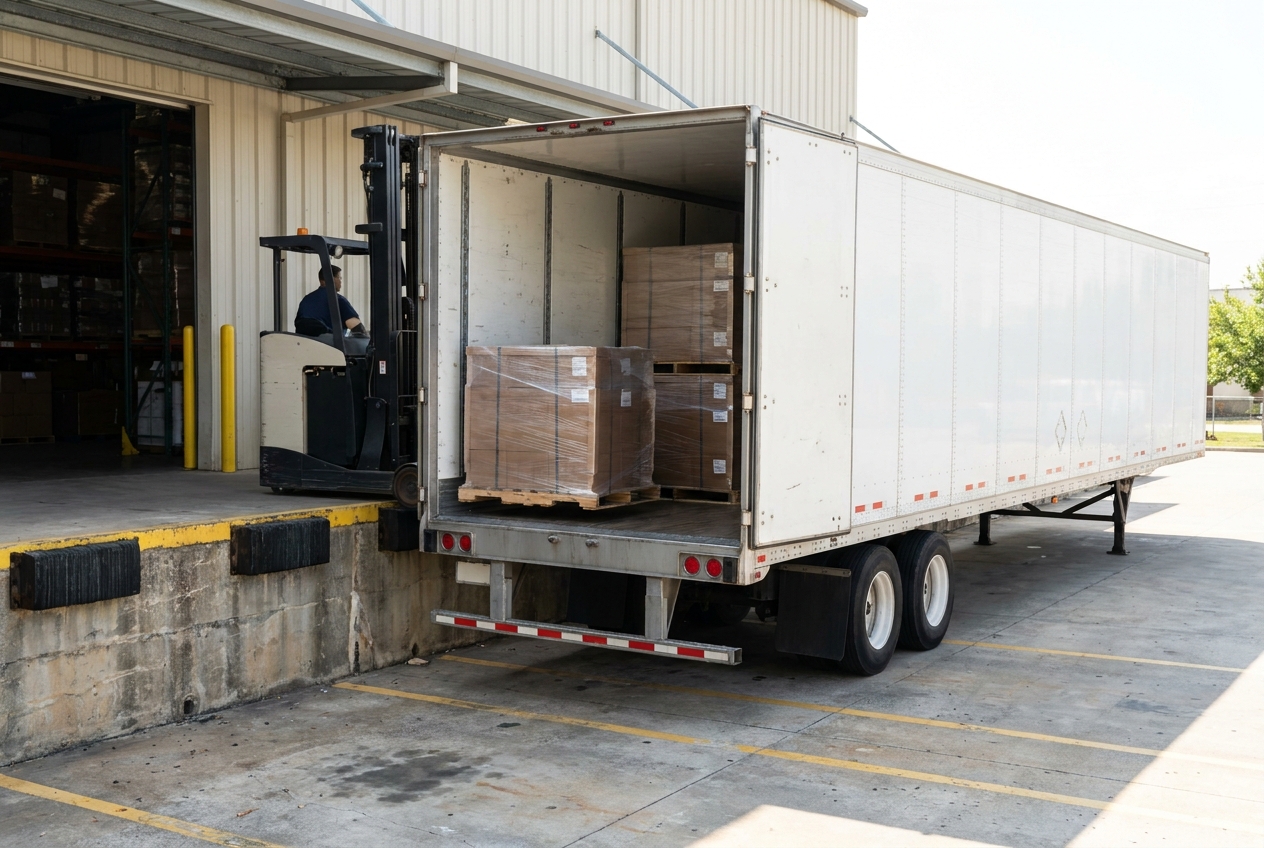
Say you are shipping 8 pallets of packaged goods, each 48 by 40 by 55 inches at about 900 lb, for a total near 7,200 lb, from a warehouse to a retail distribution center 700 miles away. That load is above comfortable standard-LTL territory but well short of filling a 53 foot trailer, which is exactly the volume LTL zone.
Priced as standard LTL, 8 pallets means 8 sets of terminal handling and a class-driven rate that climbs with the bulky dimensions. Priced as FTL, you pay for a full trailer you would only half fill. Volume LTL usually wins here: a per-shipment partial quote, fewer handling touchpoints, and no charge for empty space. If the freight were fragile or the delivery date firm, the calculus shifts toward FTL for single-handling, direct-transit reliability even at a higher rate. Near the line, quote all three and weigh all-in cost against your damage and deadline tolerance.
How do you find the right carrier or broker?
Once you know the mode, match it to providers who run that lane well. For shared-network freight, compare carriers in the LTL freight category, and for dedicated trailers browse long-haul truckload carriers. A broker helps when you ship irregular volumes or need capacity across many lanes; see how to choose a freight broker.
Whichever mode you land on, vet the provider before you tender freight. Confirm active operating authority and a clean safety profile (national freight data is published by the Bureau of Transportation Statistics), and ask the operational questions that separate reliable carriers from cheap quotes. Our list of questions to ask a long-haul trucking company is a useful starting point for either LTL or FTL sourcing.
Frequently asked questions
What is the difference between LTL and FTL shipping?
LTL (less-than-truckload) puts your freight on a shared trailer with other shippers' loads and is priced by freight class, weight, distance, and accessorials. FTL (full truckload) dedicates an entire truck to one shipment at a flat lane rate. LTL suits small loads; FTL suits large, time-sensitive, or fragile freight.
How many pallets is too many for LTL?
As a rule of thumb, once a shipment reaches roughly 6 or more pallets or about 12,000 to 15,000 lb, volume LTL or full truckload often prices out lower and handles the freight less. These are guidelines, not hard cutoffs, so quote both ways when you are near the line.
What is volume or partial LTL?
Volume or partial LTL is a middle option for shipments that are too big for standard LTL but do not fill a whole trailer, often around 6 to 12 pallets or 5,000 to 12,000 lb. It is quoted per shipment rather than strictly by freight class and usually involves less handling than standard LTL.
Is FTL always faster than LTL?
Usually, yes. FTL moves point to point with no terminal stops, so transit is typically shorter and more predictable. LTL travels through a hub-and-spoke terminal network with multiple stops, which adds transit days and more handling touchpoints.
Does freight class matter for FTL?
Freight class drives LTL pricing but generally does not apply to standard FTL, which is quoted as a flat rate for the lane and equipment. You still need accurate dimensions and weight for FTL to confirm the load fits and stays under legal weight limits.
Why is my LTL shipment getting damaged?
LTL freight is handled multiple times as it moves between terminals and trailers, so poorly packaged or improperly palletized loads face more damage risk than FTL, which is loaded once and unloaded once. Tight shrink-wrap, proper stacking, and correct freight class reduce claims.
Ready to compare providers?
Search the directory by service and location, save options to your shortlist, and send a clear RFQ.
Related guides
What Is Drayage? Costs, Process, and Providers
Drayage is the short-haul trucking move that carries an ocean or rail container between a port or rail ramp and a nearby warehouse, transload, or yard.
2026 Truckload Freight Market Outlook for Shippers
A neutral, hedged read on the 2026 truckload freight market: what the capacity cycle, spot-versus-contract gap, and key signals mean for shippers, and what to do now.
Questions to Ask a Long-Haul Trucking Company
Choosing a long-haul trucking company is not just about getting a truck at the lowest rate. When freight is moving across states or across the country, reliability, communication, lane coverage, equipment, insurance, and scheduling all matter. The right carrier can help keep freight moving on time and reduce avoidable problems. The wrong carrier can create […]