
What Is a 3PL? When Shippers Need One
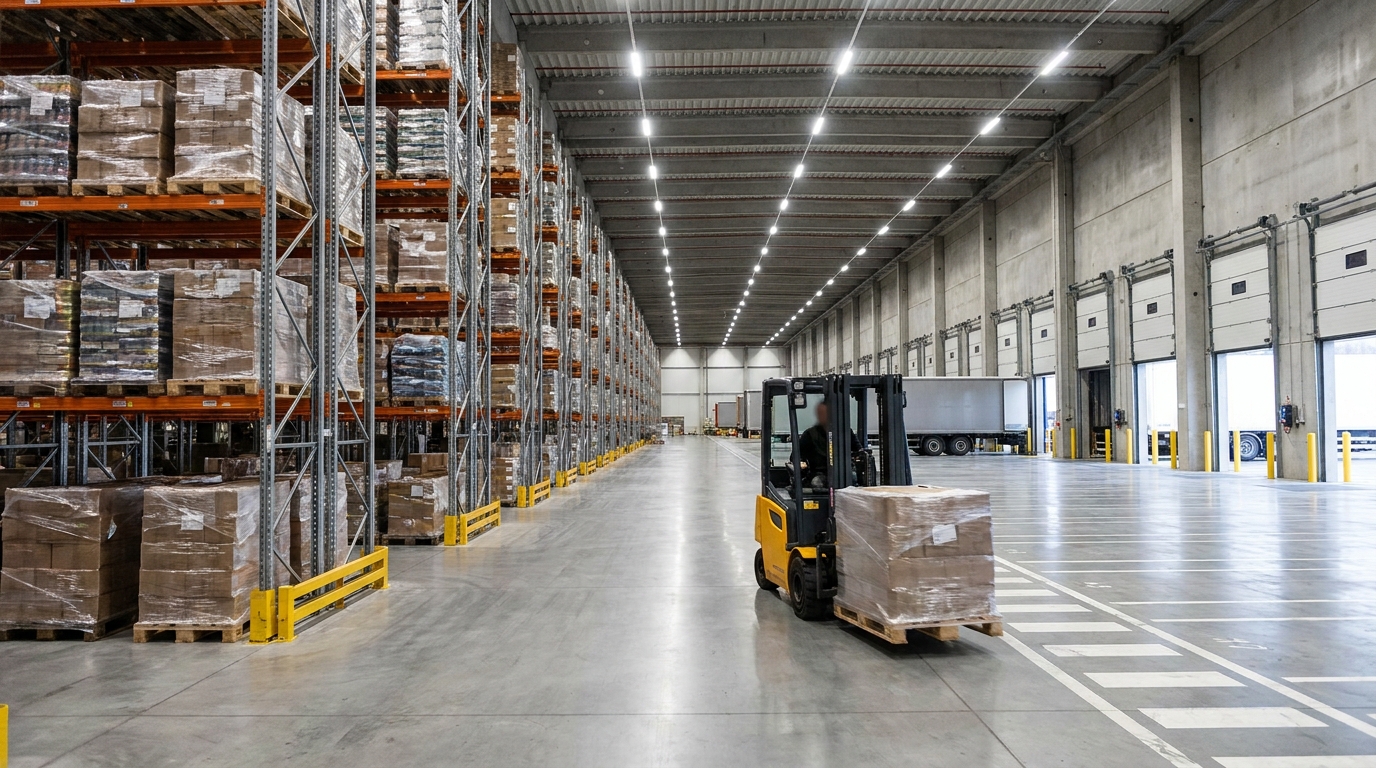
A 3PL, or third-party logistics provider, is a company that handles some or all of your warehousing, fulfillment, and transportation on your behalf. Instead of leasing your own warehouse, hiring pickers and packers, and booking freight yourself, you send your inventory to the 3PL and it stores the goods, packs each order, ships it, and often manages returns. Understanding what a 3PL is comes down to one idea: you outsource the physical movement and storage of goods so you can focus on selling them.
Key takeaways
- A 3PL (third-party logistics provider) stores your inventory and fulfills, ships, and often returns your orders so you do not run those operations in-house.
- Core 3PL services are warehousing, pick-and-pack fulfillment, freight and transportation management, kitting, and reverse logistics.
- A 3PL is broader than a freight broker (transport only) and different from an asset-based carrier (owns the trucks), and it sits below a 4PL that manages your whole supply chain.
- The move to a 3PL usually makes sense when order volume, geographic reach, capital needs, or peak surges outgrow what you can handle yourself.
- 3PLs price with a stack of fees: storage per pallet or cubic foot, receiving, pick-and-pack, and shipping, usually with a monthly minimum.
What is a 3PL?
A 3PL is an outside company you pay to run logistics functions that you would otherwise run yourself. The term covers a wide range: a pure fulfillment house that ships ecommerce parcels, a warehousing operation that stores pallets for retailers, and a transportation manager that books your freight can all call themselves 3PLs. What unites them is that they take responsibility for moving or holding your goods under a service agreement.
The relationship is defined by what you hand over. Send only your outbound freight, and the 3PL manages transportation. Send your whole inventory, and it becomes the operational home of your orders: it receives stock, stores it, picks and packs each order, and ships it to your customer with your branding on the box. You keep ownership of the goods the entire time. The 3PL is the operator, not the owner.
What services does a 3PL provide?
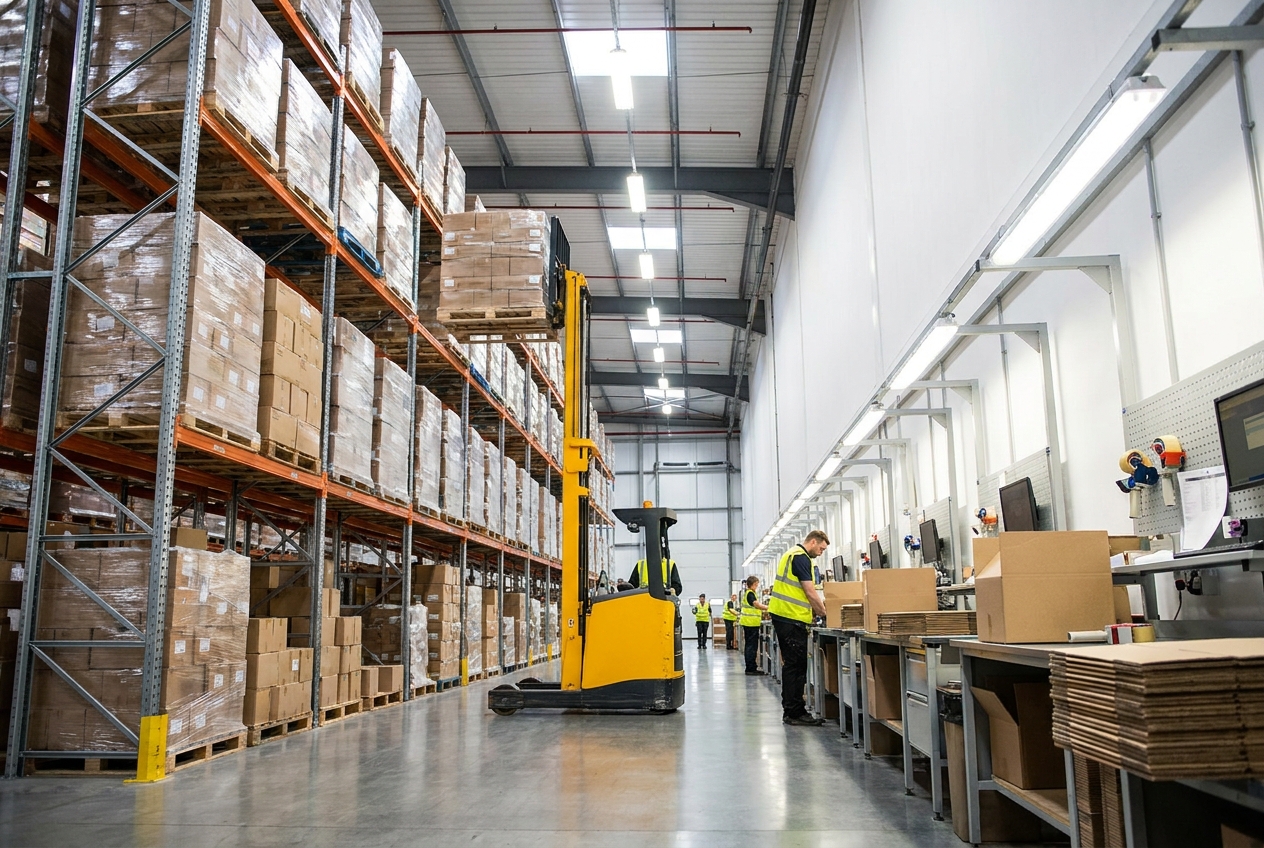
Most 3PLs offer a menu of services and you use the ones you need. The common building blocks are warehousing, fulfillment, transportation, and value-added work.
Warehousing and storage
The 3PL holds your inventory in racked or floor-stacked space, tracks it by SKU and lot, and gives you visibility into what is on hand. Storage is usually billed by the pallet, bin, or cubic foot per month.
Pick-and-pack fulfillment
When an order comes in, the 3PL picks the right units, packs them, adds any inserts, and hands the parcel to a carrier. This is the core of ecommerce fulfillment and is billed per order plus per additional item.
Freight and transportation management
Many 3PLs book inbound and outbound freight, negotiate carrier rates using their volume, and manage LTL, full-truckload, and parcel shipments. Some run their own trucks; many broker the freight to carriers.
Kitting, returns, and value-added services
Kitting bundles several SKUs into one sellable unit. Reverse logistics handles returns: inspecting, restocking, or disposing of goods that come back. Value-added work can include labeling, FBA prep, subscription-box assembly, and light customization. Reverse logistics is easy to underweight when you compare providers, so ask how each 3PL handles it before you sign.
What is the difference between 1PL, 2PL, 3PL, and 4PL?
The party numbers describe how far logistics is outsourced, from doing everything yourself to handing off the whole supply chain. A 3PL executes specific functions for you; a 4PL manages the providers that do.
| Tier | Who it is | What they do |
|---|---|---|
| 1PL | First party (you) | The shipper handles its own storage and delivery with its own people and vehicles. |
| 2PL | Second party | An asset owner that provides one link, such as a carrier that moves freight or a warehouse that only rents space. |
| 3PL | Third party | An outside provider that runs multiple logistics functions (storage, fulfillment, transport) as an integrated service. |
| 4PL | Fourth party | A manager that coordinates several 3PLs and carriers and acts as your single point of control for the whole supply chain. |
Most growing ecommerce and product brands live in the 3PL world. A 4PL tends to make sense only when you have enough volume and complexity across regions or channels that coordinating providers becomes a full-time job.
How is a 3PL different from a freight broker or a carrier?
A freight broker arranges transportation and nothing else, while an asset-based carrier owns and operates the trucks. A 3PL is usually broader than either, and the three roles often overlap, which is where the confusion comes from.
A freight broker matches your loads to carriers and manages the transaction, but does not store your inventory or pack your orders. An asset-based carrier is the company whose drivers and equipment actually haul the freight; its authority and safety record are visible through the FMCSA. A 3PL sits above the shipment: it may hold your goods, fulfill orders, and then either broker the transport or run its own fleet. When you evaluate a provider, the useful question is not what label it uses but which functions it will actually own for you.
When should a business move to a 3PL?
Move to a 3PL when the cost and distraction of running logistics in-house outweigh the control you give up. Four pressures usually force the decision.
Order volume outgrows your team
When packing orders eats hours you should spend on product and marketing, or when you cannot ship same-day anymore, a 3PL's dedicated pickers and systems restore throughput.
You need wider geographic reach
Customers expect two-day or faster delivery. A 3PL with multiple warehouses lets you split inventory closer to buyers and cut transit time and zone-based shipping cost without you signing multiple leases.
Capital is better spent elsewhere
A warehouse lease, racking, equipment, and staff tie up cash. Outsourcing converts that fixed cost into a variable one that scales with orders, which frees capital for inventory and growth. The SBA is a useful reference when you are weighing that capital trade-off for a small business.
Peak surges overwhelm your space
If your fourth-quarter volume triples and then falls back, building for the peak wastes money most of the year. A 3PL absorbs the surge with shared labor and space you do not pay for in the off-season.
When does it make sense to stay in-house?
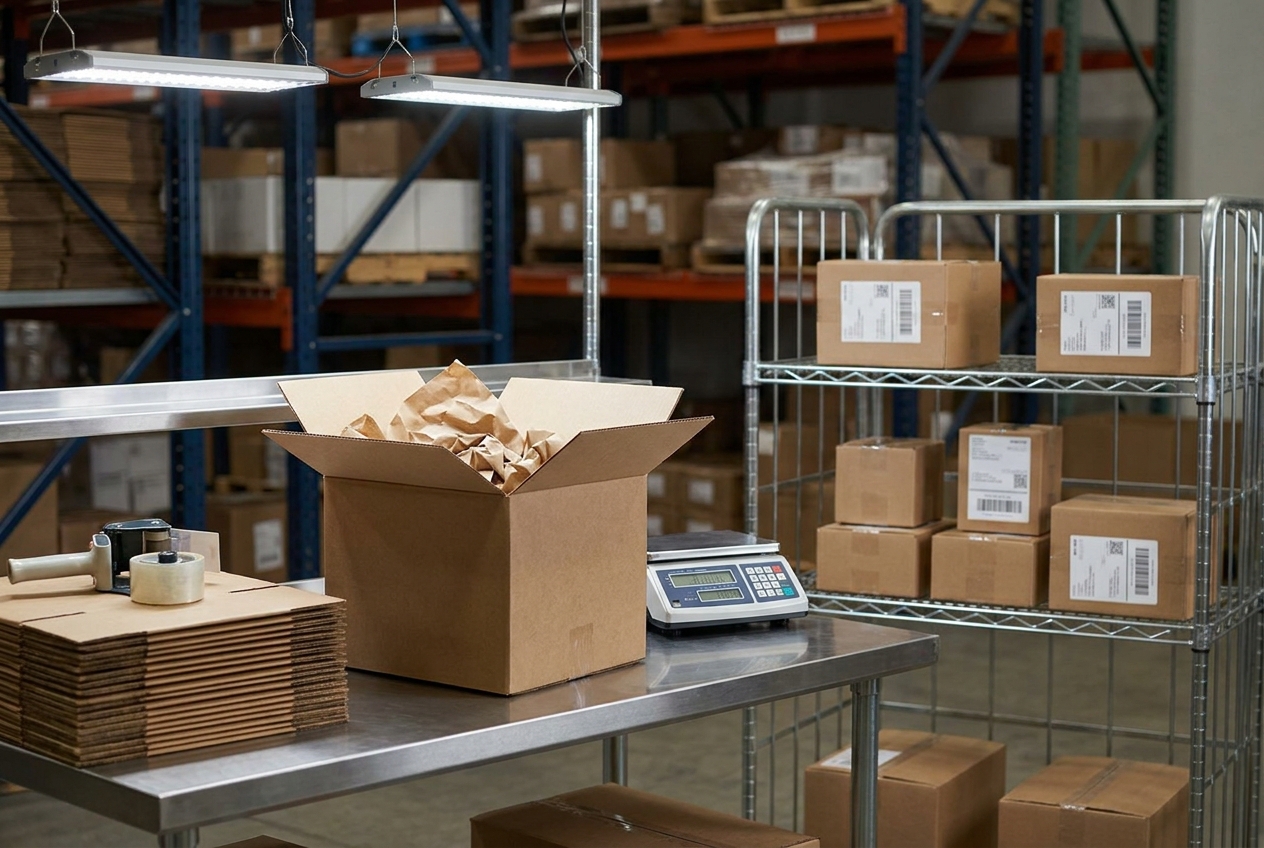
Keep fulfillment in-house when volume is low, margins are thin enough that a 3PL's fees would erase them, or the unboxing and handling are a core part of your brand. The table below frames the trade-off.
| Factor | In-house fulfillment | 3PL fulfillment |
|---|---|---|
| Control | Full control of packing, inserts, and timing | Standardized process; custom work costs extra |
| Cost structure | Mostly fixed (lease, staff, equipment) | Mostly variable, scales with orders |
| Speed and reach | Limited to your locations | Multiple nodes closer to customers |
| Best fit | Low volume, custom or fragile handling, tight margins | Growing volume, nationwide delivery, seasonal peaks |
For a fuller side-by-side, see our guide on in-house fulfillment versus a 3PL. Many brands run a hybrid: they keep a small in-house operation for custom or VIP orders and use a 3PL for the bulk of standard shipments.
How do 3PLs price their services?
3PLs charge a stack of fees rather than one flat rate, and the mix is what makes quotes hard to compare. The common components are storage, receiving, and pick-and-pack, plus outbound shipping and a monthly minimum.
- Storage is billed per pallet, per bin, or per cubic foot per month. Slow-moving inventory that sits for months can quietly become your biggest line item.
- Receiving covers unloading and putting away your inbound stock, billed per shipment, per hour, or per unit.
- Pick-and-pack is a per-order fee plus a small charge per additional item, and it is the fee most tied to your order volume.
- Shipping is the carrier cost, often at the 3PL's negotiated rates, sometimes with a markup.
- Minimums mean you pay a floor each month even if volume dips, so low-volume shippers should watch this closely.
Worked example: say you store 20 pallets and ship 1,500 single-item orders in a month. Your bill might combine 20 pallets of monthly storage, a receiving charge for the inbound truck, 1,500 pick-and-pack fees, and 1,500 outbound labels. Change any one input, especially storage duration or order count, and the total moves noticeably. To pressure-test a quote, run your own numbers through our warehouse cost calculator before you compare providers, and read ecommerce fulfillment costs explained for how each fee behaves as you scale.
How do you choose the right 3PL?
Choose a 3PL by matching its network, systems, and service terms to how you actually ship, not by picking the lowest headline rate. Weigh these factors before you sign.
- Warehouse locations. Do the facilities put inventory near your customers and keep your zone-based shipping cost down?
- Integrations. Does it connect cleanly to your store, marketplaces, and order systems so inventory and tracking sync automatically?
- Service-level agreements. Get the SLA in writing: same-day cutoff times, order accuracy, and how errors are credited.
- Minimums and fee schedule. Read every line, including long-term storage and returns fees, and model your real volume against it.
- References. Talk to current clients of similar size and product type, and ask what breaks during peak season.
If your catalog is ecommerce-heavy, our step-by-step on how to choose an ecommerce fulfillment provider walks through scoring candidates. When you are ready to compare real companies, browse verified providers in the warehousing and 3PL and ecommerce fulfillment categories.
How do you onboard a 3PL without breaking your operation?
Onboard in stages so a data or inventory error does not strand live orders. Solid onboarding is mostly about clean data and a controlled cutover.
Start by syncing your SKUs, dimensions, and weights so the 3PL can slot and bill correctly. Send a test inbound shipment and confirm the receiving report matches your packing list unit for unit. Run a small batch of live orders and check accuracy, packaging, and tracking before you shift full volume. Only then move your whole catalog, and keep enough safety stock during the transition to cover mistakes. Setting these expectations against a written SLA from the start is what keeps a launch from turning into a firefight.
What are the red flags when evaluating a 3PL?
The warning signs show up before you sign if you look for them. Watch for a provider that will not put SLAs or accuracy targets in writing, that quotes a vague all-in rate instead of an itemized fee schedule, or that cannot explain how it handles returns and inventory discrepancies.
Other red flags include a refusal to share reference clients, integrations that require manual spreadsheet uploads, and long-term storage fees buried in the contract. According to logistics data tracked by the Bureau of Transportation Statistics, freight and fulfillment volumes swing hard by season, so a 3PL that cannot describe its peak-season plan is telling you something. The goal is a partner whose fees, SLAs, and systems you understand fully before your inventory ever leaves your dock. When you are ready, start comparing providers in our directory of logistics companies.
Frequently asked questions
What does 3PL stand for?
3PL stands for third-party logistics. It refers to an outside provider that handles logistics functions such as warehousing, order fulfillment, and freight transportation on a shipper's behalf, rather than the shipper running those functions in-house.
What is the difference between a 3PL and a freight broker?
A freight broker arranges transportation only, matching your loads to carriers. A 3PL usually covers a broader scope, including storing inventory, picking and packing orders, and managing returns, often alongside transportation. Some 3PLs include brokerage as one of several services.
Is a 3PL the same as a warehouse?
No. A warehouse is a building for storage. A 3PL provides services, which typically include storage but also add receiving, pick-and-pack fulfillment, shipping, returns, and reporting. You can rent a warehouse and staff it yourself, or pay a 3PL to run the whole operation.
How much does a 3PL cost?
3PLs usually charge a mix of fees: storage per pallet or cubic foot per month, a receiving fee per shipment or unit, and a pick-and-pack fee per order, plus outbound shipping. Many set monthly minimums. Total cost depends on order volume, unit size, and how many services you use.
When should a small business use a 3PL?
Consider a 3PL when order volume outgrows what you can pack yourself, when you need faster nationwide delivery, when peak-season surges overwhelm your space, or when the capital tied up in a warehouse and staff would be better spent on the product and marketing.
What is a 4PL and how is it different from a 3PL?
A 4PL, or fourth-party logistics provider, manages your entire supply chain and coordinates multiple 3PLs and carriers on your behalf. A 3PL executes specific functions; a 4PL sits above them as a single point of control, often without owning warehouses or trucks itself.
Ready to compare providers?
Search the directory by service and location, save options to your shortlist, and send a clear RFQ.
Related guides
Section 321 De Minimis Changes: What Importers Should Do Now
US policy is narrowing the Section 321 de minimis exemption. Here is who is affected and the practical steps importers should take before the rules change.
What Documents Do Customs Brokers Need?
The documents customs brokers need usually include a commercial invoice, packing list, bill of lading or air waybill, importer details, product descriptions, country of origin, and any product-specific documents required for customs clearance. A broker can only clear a shipment as accurately as the information they receive, so importers should prepare these documents before freight […]
Shopify Fulfillment: What to Ask a 3PL Before Moving Inventory
The right 3PL should fit the brand’s order profile, not just connect to Shopify.