
What Is LTL Freight? How It Works and Costs
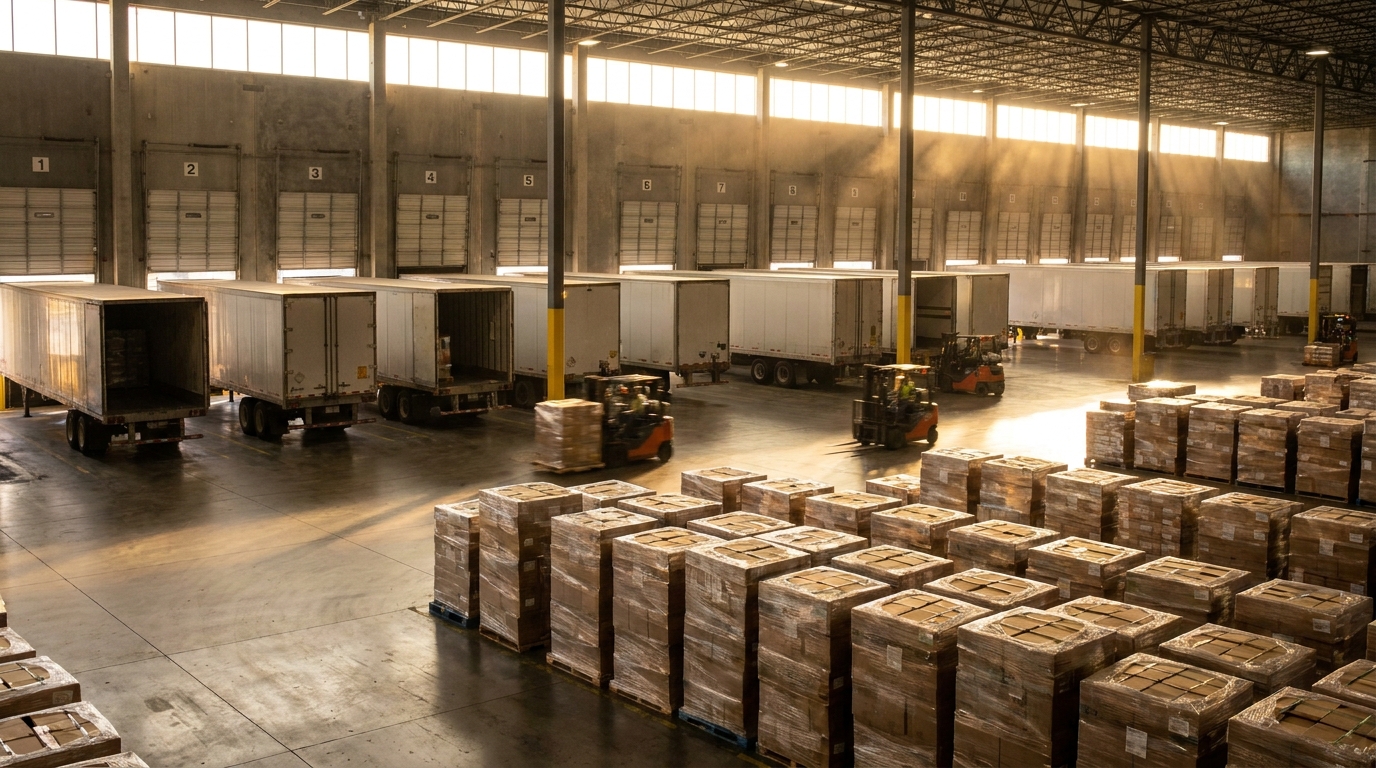
LTL freight, short for less-than-truckload, is how you ship palletized goods that are too big for a parcel carrier but do not fill an entire trailer. Instead of paying for a whole truck, your pallets share space with other shippers' freight, and you pay only for the room and weight you use. A typical LTL shipment runs from about 1 to 6 pallets or roughly 150 to 15,000 pounds, moving through a carrier's network of terminals rather than on one direct truck.
Key takeaways
- LTL freight is shared-truck shipping for pallets that fall between parcel and a full truckload, usually 1 to 6 pallets or 150 to 15,000 pounds.
- Carriers price LTL from freight class, weight, distance, fuel, and accessorial charges, then apply a negotiated discount to their tariff.
- Freight class is driven mainly by density: heavier, denser pallets get a lower class and a lower rate.
- LTL travels hub-and-spoke through terminals, so it is handled multiple times and carries more damage risk than a direct truckload.
- LTL fits 1 to 6 pallets; parcel wins below about 150 pounds, and full truckload usually wins once you reach 6 or more pallets.
What does LTL freight mean?
LTL freight means a shipment that occupies part of a trailer rather than the whole thing, so the carrier consolidates it with other shippers' freight headed the same direction. Each shipper pays for their share of the space and weight instead of the full trailer.
The mode sits in the middle of the shipping ladder. Small boxes under about 150 pounds go parcel through carriers built for individual packages. Loads that fill a trailer, or that you do not want handled by anyone else, go full truckload, or FTL. LTL covers everything in between: skidded and shrink-wrapped freight that needs a forklift but not a dedicated truck. If you are weighing the two larger modes head to head, our guide on LTL vs FTL shipping breaks down the exact crossover point.
How does the LTL hub-and-spoke network work?
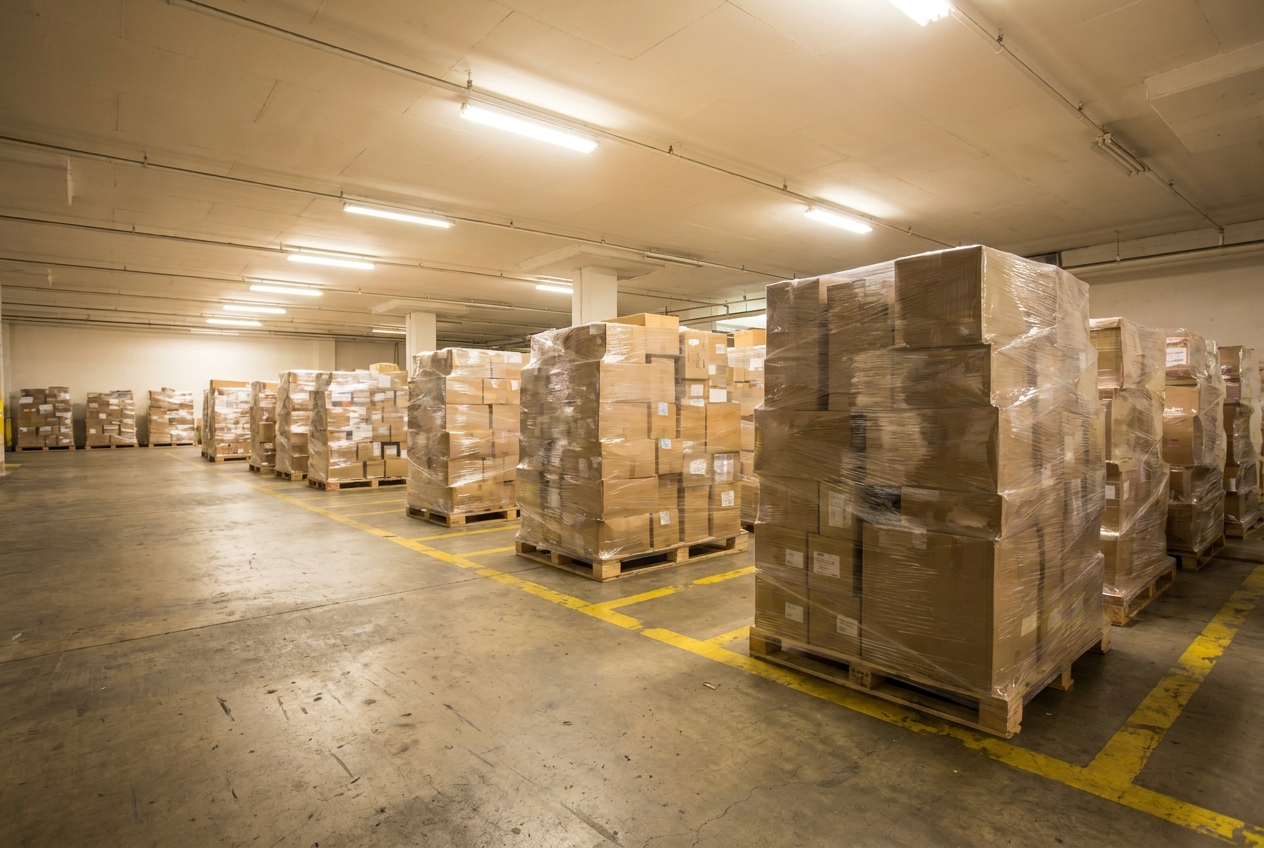
LTL carriers move freight through a hub-and-spoke terminal network, not on point-to-point trucks. A local pickup truck brings your pallet to a nearby service center, where it is combined with other freight, line-hauled to one or more hub terminals, sorted, and finally delivered by a local truck at the destination.
That structure is what makes LTL affordable, because one trailer carries a dozen shippers' freight on the long leg. It is also why LTL takes longer than a direct truck and why transit times are quoted as business-day ranges rather than exact hours. A shipment crossing several regions may pass through two or three terminals, and each stop is a place where a pallet is loaded, unloaded, and restacked.
How do carriers rate LTL freight?
Carriers rate LTL from a stack of inputs: freight class, actual weight, the origin and destination zip codes, distance, a fuel surcharge that moves with diesel prices, and any accessorial charges the delivery requires. They apply these against a published tariff, then subtract the discount negotiated for your account.
Freight class and density
Freight class is the single biggest lever. It is a standardized code from 50 to 500 set by the National Motor Freight Classification, and for most commodities it is driven by density, meaning pounds per cubic foot. Dense, stackable freight earns a low class and a low rate; light, bulky freight earns a high class and costs more to move.
Dimensions and NMFC codes
Because class hinges on density, carriers care about your pallet's exact dimensions, not just its weight. Understating either the size or the weight leads to a reweigh or reclassification and a corrected invoice after the fact. You can estimate your class before you book with our freight class calculator, and check DIM math with the dimensional weight calculator.
What is freight class and how is it set?
Freight class is a standardized NMFC code from 50 to 500 that groups commodities by four factors: density, handling, stowability, and liability. A lower number means denser, easier freight and a cheaper rate; a higher number means light, awkward, or fragile freight and a higher rate.
Density usually dominates, but the other three factors can override it. A commodity that is hard to handle, cannot be stacked, or carries high theft or damage liability can be assigned a higher class even when it is reasonably dense. Some commodities have a fixed class regardless of density, so when in doubt, confirm the NMFC item with your carrier rather than guessing.
How do you calculate freight density?
To calculate density, multiply the pallet's length, width, and height in inches to get cubic inches, divide by 1,728 to get cubic feet, then divide the total weight by that figure. The result is pounds per cubic foot, which maps to a class band.
Take a worked example. A palletized shipment measuring 48 by 40 by 60 inches works out to 115,200 cubic inches, or about 66.7 cubic feet. If it weighs 400 pounds, its density is roughly 6 pounds per cubic foot. That is a low-density, higher-class load, so it will rate well above a compact 400-pound pallet that occupies half the space. The lesson: the same weight can cost very different amounts depending on how much air you are shipping.
What are accessorial charges in LTL?
Accessorial charges are fees for services beyond a standard dock-to-dock pickup and delivery. They are one of the most common sources of surprise on an LTL invoice, because a shipper quotes a base rate and forgets to flag the extras the delivery actually needs.
Common accessorials include liftgate service when there is no loading dock, residential pickup or delivery, inside delivery, limited-access locations such as schools or construction sites, appointment scheduling, and reweigh or reclassification fees. Detention applies when a driver waits beyond the free window to load or unload. Declare every service you need up front so the rate you are quoted is the rate you pay. Our guide to accessorial charges explained lists the common ones and what each typically covers.
LTL vs parcel vs FTL: which should you use?
Use parcel for small, light boxes, LTL for a handful of pallets, and full truckload once you fill most of a trailer or need untouched, direct transit. The table below shows where each mode fits.
| Factor | Parcel | LTL freight | Full truckload (FTL) |
|---|---|---|---|
| Typical size | Boxes under ~150 lb | 1 to 6 pallets, ~150 to 15,000 lb | 6+ pallets or a full trailer |
| What you pay for | Per package, by weight and zone | Your share of the trailer, by class | The whole trailer |
| Handling | Automated sortation, many touches | Multiple terminal touches | Loaded once, direct to destination |
| Transit | Fast, 1 to 5 days | Moderate, quoted in business days | Fastest for the distance, direct |
| Damage risk | Moderate | Higher, from repeated handling | Lowest, freight stays put |
| Best for | Small ecommerce orders | Palletized freight below a full load | High volume or fragile, time-sensitive loads |
When does LTL freight make sense?
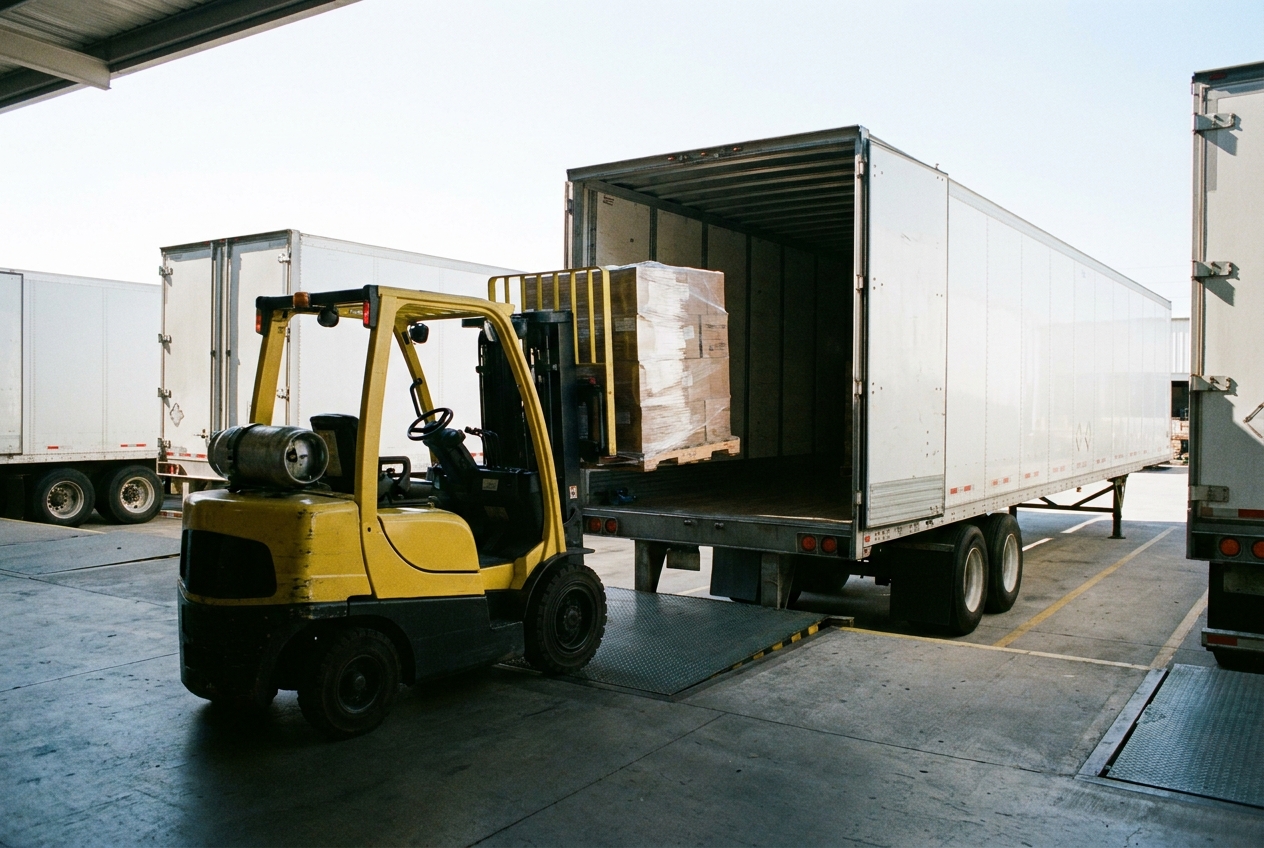
LTL makes sense when your shipment is too big or heavy for parcel but does not justify a whole trailer, generally 1 to 6 pallets. It is the default for palletized B2B orders, restock shipments, and freight moving between businesses with docks.
The edges are where it gets interesting. Near the bottom, a single heavy box under about 150 pounds sometimes ships cheaper as parcel, especially over short distances. Near the top, once you reach 6 or more pallets, or your freight is fragile enough that repeated handling is a real risk, volume LTL or a full truckload can price better and protect the goods. Run the numbers both ways at the crossover instead of assuming LTL is automatically cheaper.
How much does LTL freight cost?
LTL cost depends on freight class, weight, distance, fuel surcharge, and accessorials, so there is no flat per-pallet price. A short regional move of a dense, low-class pallet with no special services sits at the low end, while a long-haul, high-class, bulky pallet needing a liftgate and residential delivery can cost several times more.
Rather than chase a single number, focus on the levers you control. Palletize tightly to raise density and lower your class. Give accurate dimensions and weight so you are not reclassified. Declare accessorials up front. And compare carrier discounts, since two carriers can quote very different net rates off similar tariffs. The LTL freight carriers directory is a neutral place to line up providers, and a structured RFQ makes their quotes comparable.
Why does LTL freight get damaged, and how do you prevent it?
LTL freight is handled more than any other mode short of parcel, because every terminal it passes through means a forklift loads, unloads, and restacks the pallet next to other shippers' goods. Each touch is an opportunity for a fork to punch a carton or a stack to shift, which is why LTL claims run higher than truckload.
You cannot eliminate the handling, but you can harden the freight against it. Use a sturdy, correctly sized pallet with no overhang, stack heavy on the bottom, and stretch wrap tightly all the way to the pallet deck. Corner boards and banding help tall or fragile loads. Label clearly, and photograph the finished pallet before pickup so you have evidence if you file a claim. For fragile or high-value goods where handling risk is the deciding factor, weigh a full truckload instead.
How do you book and prepare an LTL shipment?
Booking LTL comes down to describing the freight accurately and flagging every service the stops require. Get the class and dimensions right, and most surprises disappear.
- Measure and weigh the finished, wrapped pallet, including the pallet itself.
- Determine the freight class from density and the correct NMFC item.
- List every accessorial: liftgate, residential, inside delivery, limited access, appointment.
- Generate an accurate bill of lading, the legal contract and receipt for the shipment.
- Palletize and wrap so the load survives repeated handling.
- Photograph the pallet and keep the signed delivery receipt in case of a claim.
How can you lower LTL freight costs?
The cheapest LTL shipment is one that is classed correctly, packaged densely, and free of avoidable accessorials. Small changes to how you build a pallet often move the rate more than switching carriers.
Consolidate several small orders into one denser pallet to lower the class. Ship to commercial addresses with docks to skip liftgate and residential fees. Book pickups earlier in the day so a missed appointment does not trigger a redelivery. And review your invoices for reweigh or reclass adjustments, which flag where your declared data was off. Our deeper guide on how to reduce LTL freight costs walks through each lever, and you can confirm a carrier's safety record and operating authority through the FMCSA before you book. National freight-flow data from the Bureau of Transportation Statistics can help you sanity-check lane demand and seasonality when you plan.
Frequently asked questions
What does LTL stand for in freight?
LTL stands for less-than-truckload. It describes freight shipments that are too large for parcel carriers but do not fill an entire trailer, so several shippers' pallets share the same truck and each pays only for the portion they use.
How many pallets is considered LTL?
LTL typically covers roughly 1 to 6 standard pallets or about 150 to 15,000 pounds. Once a shipment reaches 6 or more pallets or fills most of a trailer, volume LTL or a full truckload usually prices better.
How is LTL freight priced?
LTL rates are built from freight class (driven mainly by density), weight, origin and destination zip codes, distance, fuel surcharge, and any accessorial charges such as liftgate or residential delivery. Carriers apply these against their tariff, then discount it.
Is LTL cheaper than a full truckload?
For 1 to 6 pallets, LTL is usually cheaper because you pay only for the space you use instead of a whole trailer. As pallet count, weight, or handling risk climbs, a full truckload often becomes cheaper per unit and safer for the freight.
Why does LTL freight get damaged more than truckload?
LTL freight is handled several times as it moves through terminals, where forklifts load, unload, and restack pallets alongside other shippers' goods. Each touch adds a chance of damage, which is why sturdy pallets and tight stretch wrapping matter.
What is a freight class in LTL?
Freight class is a standardized NMFC code from 50 to 500 that groups commodities by density, handling, stowability, and liability. Denser, easier-to-handle freight gets a lower class and a lower rate; light, bulky, or fragile freight gets a higher class.
Ready to compare providers?
Search the directory by service and location, save options to your shortlist, and send a clear RFQ.
Related guides
How to Reduce LTL Freight Costs: 9 Levers
Nine practical levers to reduce LTL freight costs, from accurate freight class and density to consolidation, FAK exceptions, and smarter carrier selection.
Cross-Border Freight Between the US and Mexico
How cross-border shipping between Mexico and the US works: the crossing process, customs brokers on both sides, documents, modes, USMCA, C-TPAT, and how to pick a partner.
What Is Intermodal Shipping? Benefits and Tradeoffs
Intermodal shipping moves freight in one sealed container across truck and rail without rehandling the goods. Here is how it works, what it costs you in transit time, and when it beats over-the-road trucking.