
Freight Class Explained: The NMFC System
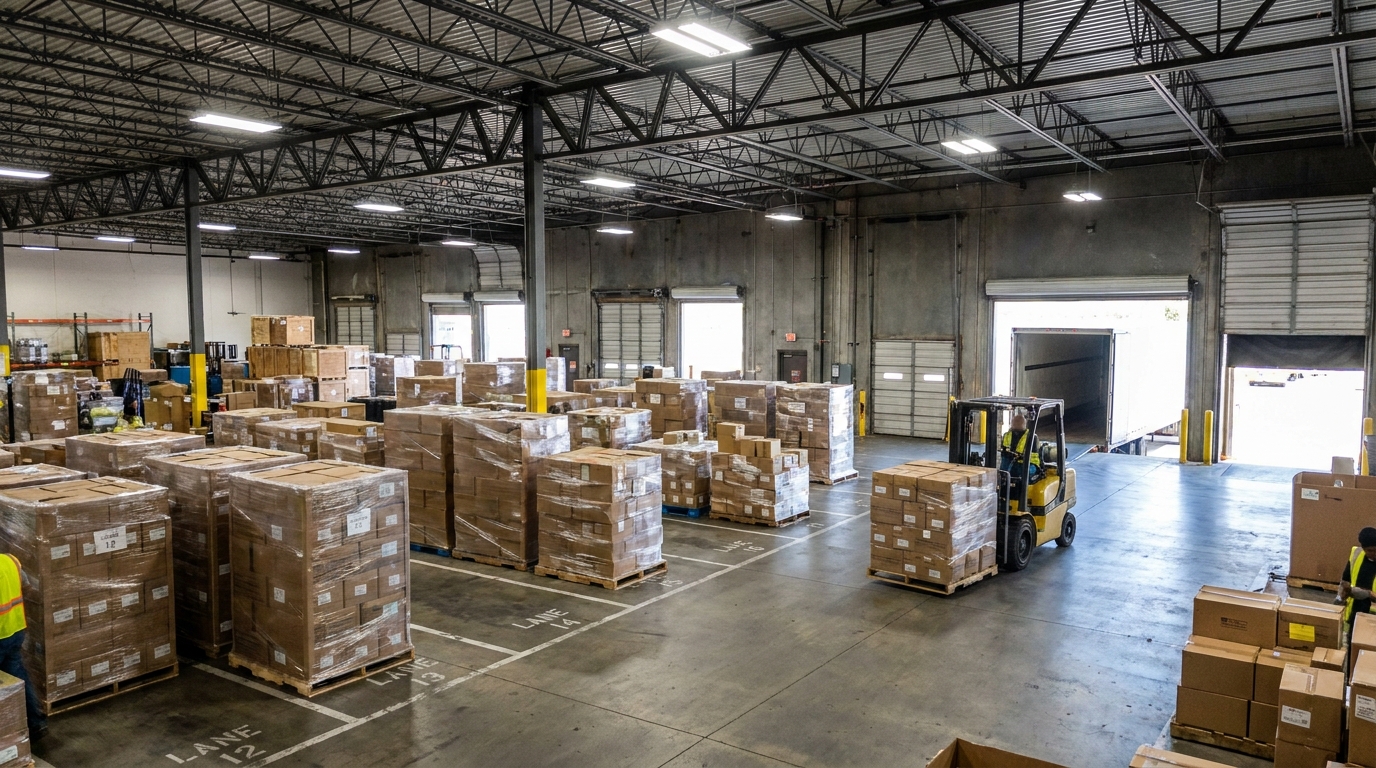
Freight class is a standardized code from 50 to 500 that determines what you pay to move a less-than-truckload (LTL) shipment. It comes from the National Motor Freight Classification (NMFC), a system maintained by the National Motor Freight Traffic Association (NMFTA) that sorts every commodity into one of 18 classes based on how hard and costly it is to haul. A lower freight class means denser, easier-to-ship goods and a lower rate. A higher class means light, bulky, fragile, or high-value freight that costs more per pound. Getting the class right on your bill of lading is the difference between a clean invoice and a surprise reclassification charge.
Key takeaways
- Freight class is an NMFC code from 50 (cheapest to ship) to 500 (most expensive), and there are 18 classes in total.
- Four factors set the class: density, stowability, handling, and liability. Density is usually the biggest driver.
- You find your class from the NMFC item number for your commodity, or estimate a density-based class with a calculator.
- An FAK (Freight All Kinds) agreement bills a range of your goods at one blended class to simplify pricing.
- Wrong dimensions or weight on the bill of lading trigger a reweigh or reclassification, which adds fees.
What is freight class and who sets it?
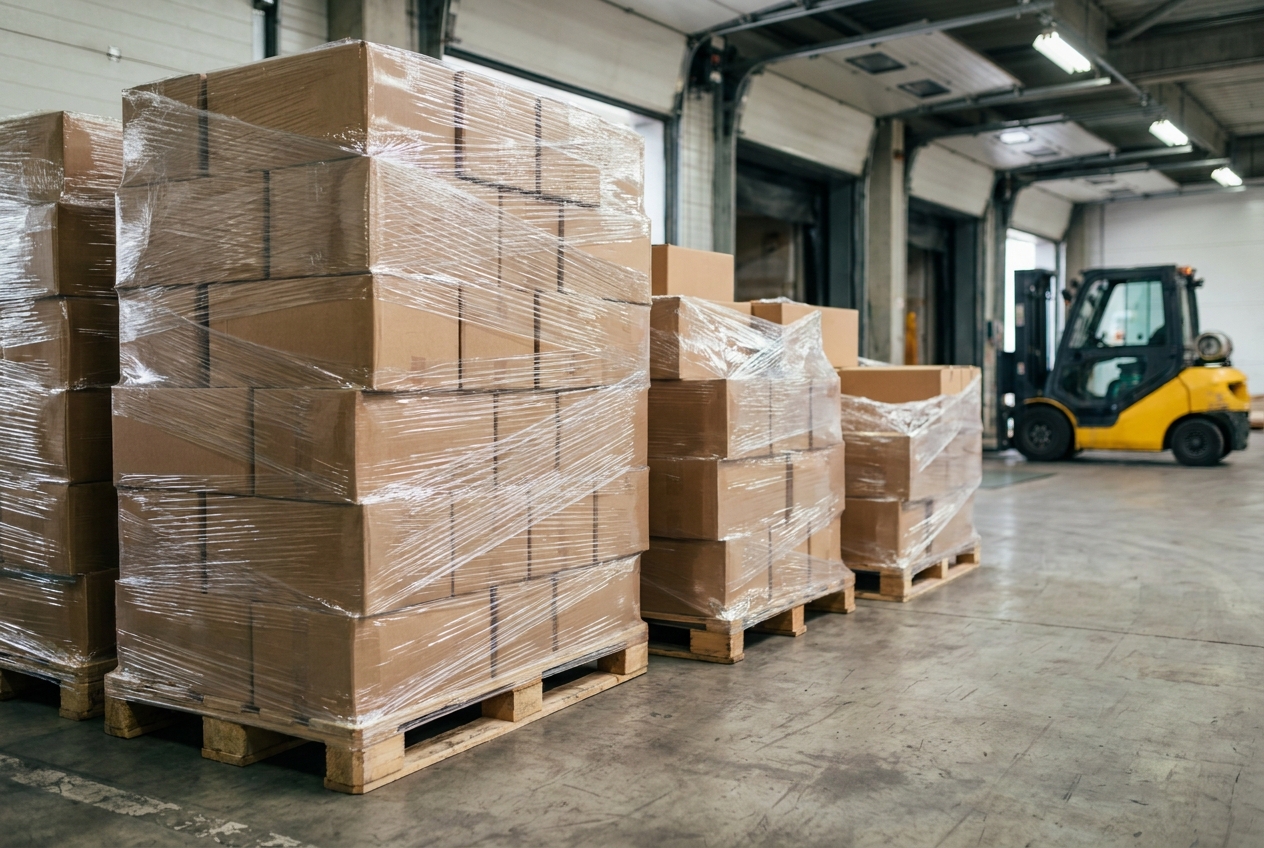
Freight class is a national standard, not a number your carrier invents. The NMFC is published by the NMFTA, and it assigns each commodity an item number and a class so that any carrier prices the same freight consistently. The system exists because an LTL carrier fills one trailer with dozens of shippers' goods, and it needs a fair, uniform way to charge for the space and risk each shipment takes up.
Every commodity falls into one of 18 classes: 50, 55, 60, 65, 70, 77.5, 85, 92.5, 100, 110, 125, 150, 175, 200, 250, 300, 400, and 500. Class 50 is reserved for very dense, durable freight such as tightly packed machinery or bricks on a pallet. Class 500 covers the lightest and most awkward loads, such as ping-pong balls or unboxed furniture, that eat trailer space without adding weight. Most everyday freight lands somewhere in the middle.
What are the four factors that determine freight class?
The NMFC weighs four characteristics to place a commodity in a class. Density usually carries the most weight, but the other three can raise a class even when the freight is heavy.
Density
Density is weight per cubic foot, and it is the single biggest driver of class for most goods. Dense freight uses trailer space efficiently, so it earns a lower class. A pallet of light, bulky foam takes the same floor space as a pallet of dense parts but weighs a fraction as much, so it costs more to ship relative to its weight.
Stowability
Stowability is how easily your freight loads alongside other shippers' goods. Standard, stackable pallets stow well. Oversized, oddly shaped, hazardous, or non-stackable items are harder to fit around, so they push toward a higher class. Anything a carrier cannot load next to normal freight, such as hazmat or a load that cannot bear weight on top, is penalized here.
Handling
Handling reflects how much care and labor the freight demands. Fragile, delicate, or loose items that need manual handling or special care raise the class. Goods that move cleanly by forklift on a standard pallet do not.
Liability
Liability captures the risk the freight carries: its value per pound, how prone it is to theft or damage, whether it is perishable, and whether it can harm adjacent freight. High-value electronics and perishable or hazardous goods carry more liability and land in higher classes, because the carrier is exposed to more risk while it is in their custody.
What are the freight classes from 50 to 500?
For density-based commodities, the NMFC maps a density range in pounds per cubic foot to a class. The denser the freight, the lower the class and the lower the rate. The table below shows the standard density scale carriers use as the starting point.
| Freight class | Density (lbs per cubic foot) | Typical example |
|---|---|---|
| 50 | 50 or more | Bricks, dense machine parts |
| 55 | 35 to 50 | Hardwood flooring, tile |
| 60 | 30 to 35 | Car accessories, some castings |
| 65 | 22.5 to 30 | Boxed books, bottled beverages |
| 70 | 15 to 22.5 | Auto parts, packaged food |
| 77.5 | 13.5 to 15 | Tires, some appliances |
| 85 | 12 to 13.5 | Crated machinery, cast parts |
| 92.5 | 10.5 to 12 | Computers, monitors, refrigerators |
| 100 | 9 to 10.5 | Boat covers, canvas, wine cases |
| 110 | 8 to 9 | Cabinets, framed artwork |
| 125 | 7 to 8 | Small appliances, packaged goods |
| 150 | 6 to 7 | Auto sheet metal, bookcases |
| 175 | 5 to 6 | Clothing, couches, stuffed furniture |
| 200 | 4 to 5 | Aircraft parts, aluminum tables |
| 250 | 3 to 4 | Mattresses, plasma TVs |
| 300 | 2 to 3 | Wood cabinets, tables, model boats |
| 400 | 1 to 2 | Deer antlers, light assembled items |
| 500 | Less than 1 | Ping-pong balls, bagged gold dust |
Treat the examples as illustrations, not fixed rules. Many commodities carry a fixed NMFC item number that sets the class regardless of density, and the classification system has been evolving toward density as the primary factor for a broader set of goods. Always confirm the current NMFC entry for your product rather than assuming from the density band alone.
How is freight density calculated?
Freight density is weight in pounds divided by volume in cubic feet. To get cubic feet, multiply length by width by height in inches and divide by 1,728 (the number of cubic inches in a cubic foot). Then match the result to the density scale above. A freight class calculator runs this math for you and returns the density-based class in one step, which is the fastest way to sanity-check a bill of lading before it ships.
Consider a worked example. You have one pallet measuring 48 by 40 by 48 inches. That is 92,160 cubic inches, which divided by 1,728 gives about 53.3 cubic feet. If the loaded pallet weighs 600 pounds, its density is 600 divided by 53.3, or roughly 11.3 pounds per cubic foot. That lands in the 10.5 to 12 band, so its density-based class is 92.5. Add another 300 pounds of the same product without changing the footprint and the density climbs past 15, dropping the shipment to class 70 and a lower rate. That relationship, more weight in the same cube equals a lower class, is the core lever behind LTL pricing.
How do I find the freight class for my shipment?
Start with the NMFC item number for your specific commodity, because that is the authoritative source and it may fix your class independently of density. You have a few ways to get it:
- Look up the commodity in the NMFC (the NMFTA's ClassIT database) to find its item number and assigned class.
- Ask your LTL carrier or freight broker; they classify freight daily and can confirm the item number for what you ship.
- For density-based commodities, estimate the class yourself with a freight class calculator after weighing and measuring the packaged, palletized shipment.
Measure and weigh the freight as it actually ships, including the pallet and packaging, not the bare product. Under-declaring dimensions or weight is the most common reason a clean quote turns into a corrected, higher invoice later.

What is an FAK (Freight All Kinds) agreement?
An FAK, or Freight All Kinds, agreement is a negotiated deal in which a carrier bills a range of your commodities at one blended class instead of classing each item separately. For example, a shipper whose freight normally spans classes 70 through 125 might negotiate an FAK of 92.5, so everything in that range bills at 92.5.
FAK simplifies billing and can lower total cost when much of your freight would otherwise class higher than the FAK number. It does not help, and can cost you more, if your typical shipments class below the agreed FAK level. FAK terms are worth revisiting whenever your product mix shifts. If you are weighing an LTL contract, compare an FAK offer against your real historical class distribution rather than a hopeful average.
Why does a lower freight class cost less?
A lower class costs less because the freight uses the trailer efficiently and carries less risk. LTL carriers sell trailer space, and dense, stackable, easy-to-handle freight lets them fit more paying weight in the same 53 feet. Light or bulky freight fills the trailer by volume long before it fills it by weight, so the carrier charges more to make up for the revenue that empty air would otherwise cost. Higher classes also fold in the extra handling and liability that fragile or valuable goods create.
What are reclassification and reweigh risk?
Reclassification and reweigh risk is the chance that a carrier inspects your shipment, finds the declared class, weight, or dimensions wrong, and rebills it. LTL carriers routinely run pallets across certified scales and dimensioners at the terminal. If the actual density points to a higher class than your bill of lading declared, they reclassify the shipment, charge the difference, and frequently add an inspection or reweigh fee.
These corrections behave a lot like the surprise line items covered in our guide to accessorial charges: avoidable with accurate paperwork, expensive when ignored. Protect yourself by weighing and measuring every shipment, listing the correct NMFC item number, and keeping records in case you need to dispute a reclassification. When you are comparing carriers, verifying operating authority and safety records through the FMCSA is a sensible companion step to getting the class right.
How can I lower my freight class legally?
You cannot fake a class, but you can often earn a lower one by changing how you pack and present the freight. The goal is to raise density and improve stowability honestly.
- Palletize and stack to raise density: consolidating loose cartons into a tightly packed, stackable pallet can move a shipment into a denser, cheaper band.
- Right-size packaging so you are not shipping air; excess void space lowers density and raises class.
- Consolidate shipments so more weight rides in the same cube.
- Negotiate an FAK if your mix regularly classes high.
Our guide on how to reduce LTL freight costs goes deeper on packing, consolidation, and accessorial avoidance. The freight class calculator lets you test a repack before you ship it, so you can see whether tightening a pallet actually crosses a density breakpoint.
How does freight class relate to dimensional weight?
Freight class and dimensional weight both price the space a shipment occupies, but they apply in different worlds. Freight class governs LTL trucking through the NMFC. Dimensional (DIM) weight governs parcel and air shipments, where carriers bill the greater of actual weight and a volume-based figure. Both punish light, bulky freight for taking up room, and both reward tighter packaging.
If your business ships some orders LTL and others by parcel, model both. Use the freight class calculator for pallets and the dimensional weight calculator for boxes so you are comparing true landed transport cost across modes. If you are still deciding between shipping pallets or full trailers, our overview of LTL versus FTL shipping lays out where each mode wins.
What are the most common freight class mistakes?
The costly mistakes are almost always paperwork, not pricing. The top ones to avoid:
- Guessing the class instead of confirming the NMFC item number for the commodity.
- Measuring the bare product rather than the packaged, palletized shipment.
- Rounding weight down or estimating dimensions, which invites a reweigh.
- Assuming an FAK always saves money when part of your freight classes below it.
- Reusing an old class after you changed packaging, product, or pallet configuration.
When you are ready to move freight, you can compare vetted LTL carriers and brokers in the LTL freight directory or browse the full logistics company directory. For a broader view of how freight moves nationally, the Bureau of Transportation Statistics publishes current data on freight volumes and modes.
Frequently asked questions
What is freight class?
Freight class is a standardized code from 50 to 500 set by the National Motor Freight Classification (NMFC) and maintained by the NMFTA. It groups commodities by how difficult and costly they are to ship on an LTL trailer, based on density, stowability, handling, and liability. A lower class is denser and cheaper to move; a higher class is lighter, bulkier, or riskier and costs more per pound.
How many freight classes are there?
There are 18 freight classes: 50, 55, 60, 65, 70, 77.5, 85, 92.5, 100, 110, 125, 150, 175, 200, 250, 300, 400, and 500. Class 50 is the least expensive to ship and applies to very dense, durable freight; class 500 is the most expensive and applies to light, bulky, or high-value items.
How do I calculate freight class from density?
Divide the shipment weight in pounds by its volume in cubic feet. Get cubic feet by multiplying length, width, and height in inches and dividing by 1,728. Then match the density in pounds per cubic foot to the standard NMFC density scale. A freight class calculator does the math and lands you on the right band, but density-based commodities can still be overridden by a fixed NMFC item number.
What happens if I put the wrong freight class on my bill of lading?
The carrier can inspect, reweigh, and remeasure the shipment, then reclassify it. If the actual class or weight is higher than what you declared, they bill the difference and often add an inspection or reweigh fee. Repeated errors can also strain the carrier relationship, so accurate dimensions, weight, and NMFC code on the bill of lading protect you from surprise charges.
What is an FAK agreement?
FAK stands for Freight All Kinds. It is a negotiated arrangement in which a carrier agrees to bill a range of your commodities at one blended class instead of classing each item separately. FAK simplifies billing and can lower costs for shippers who move a mix of classes, but it only helps if your typical freight sits above the agreed FAK class.
Does a higher freight class always cost more?
As a rule, yes. A higher class signals lighter, bulkier, harder-to-stow, or higher-liability freight, and carriers price that space and risk accordingly. The exception is when an FAK agreement or a negotiated rate blends your classes, or when a fixed NMFC item number sets the class regardless of density.
Ready to compare providers?
Search the directory by service and location, save options to your shortlist, and send a clear RFQ.
Related guides
Bill of Lading Explained: Types and Why It Matters
A bill of lading is the receipt, the contract of carriage, and often the document of title for a freight shipment. Here is how each type works and why accuracy matters.
What Is Full Truckload (FTL) Shipping?
Full truckload shipping dedicates one trailer to a single shipment for a direct, no-transfer haul. Learn when FTL beats LTL, how lane-based pricing works, and which trailer to book.
What Is LTL Freight? How It Works and Costs
LTL freight moves palletized shipments that do not fill a whole trailer, sharing space and cost with other loads across a hub-and-spoke terminal network.