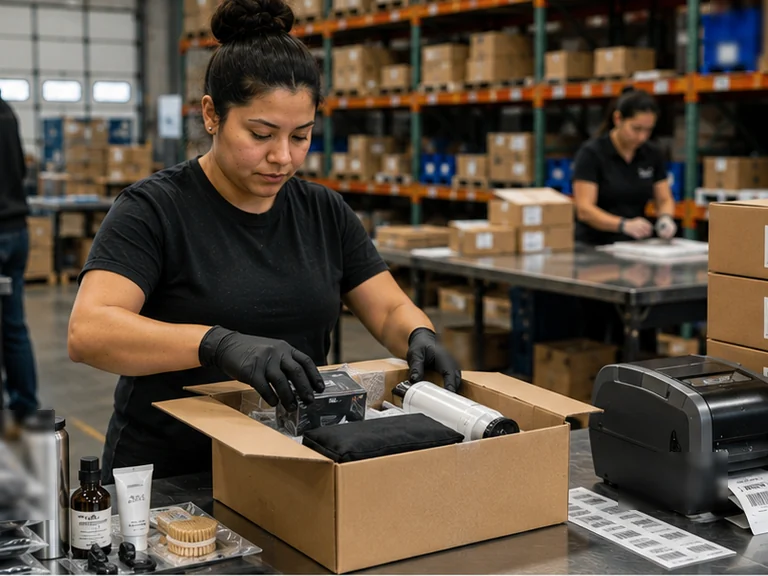
Wholesale sellers do not prep Amazon inventory the same way private-label brands do. A private-label seller usually controls the product, packaging, barcode strategy, and factory output. A wholesale seller is often receiving goods from multiple brands, distributors, or suppliers, and each source may pack, label, cartonize, and document inventory differently. That difference changes the entire prep workflow before inventory is sent to Fulfillment by Amazon.
The practical answer for wholesale sellers
Wholesale FBA prep differs from private label prep because wholesale inventory usually arrives from multiple brands or distributors, often in case packs or mixed cartons, and may have inconsistent labeling, packaging, quantities, or documentation. Private label prep is usually more standardized because the seller controls production, packaging, barcodes, and carton configuration before the goods ever reach a prep center.
For wholesale Amazon prep, the prep process is less about applying a repeatable factory-style routine and more about verifying that each inbound shipment matches the purchase order, supplier invoice, Amazon listing, and FBA shipment plan. That makes receiving discipline, label control, carton sorting, and documentation more important than they may be in a simple private-label replenishment model.
What wholesale FBA prep includes
Wholesale FBA prep is the process of receiving wholesale inventory, checking it against supplier documents, preparing it to meet Amazon’s FBA requirements, and shipping it into Amazon’s fulfillment network. Amazon provides an overview of the FBA model on its official Fulfillment by Amazon page, but sellers are still responsible for making sure their inventory is properly identified, packaged, labeled, and shipped according to current Amazon guidance.
In practical terms, wholesale prep may include:
- Receiving cartons from brands, distributors, liquidation sources, or regional suppliers.
- Checking SKUs, UPCs, model numbers, case quantities, and expiration dates when applicable.
- Inspecting retail packaging for damage, missing warnings, broken seals, or inconsistent packaging.
- Applying FNSKU labels when the seller chooses or is required to use stickered inventory.
- Polybagging, bubble wrapping, bundling, or adding suffocation warnings when required for the specific product.
- Reconciling received units against purchase orders, invoices, packing slips, and Amazon shipment plans.
- Building case-packed or individual-unit shipments for Amazon FBA.
The work is operationally simple only when the supplier is consistent. When suppliers ship mixed cartons, substitute packaging, short quantities, or incorrect UPCs, the prep workflow needs enough controls to catch problems before Amazon receives the goods.
Private label vs wholesale FBA prep: where the workflow changes
Supplier consistency versus seller-controlled production
Private-label sellers typically work from a defined product spec. The factory can apply the correct packaging, inserts, country-of-origin marks, barcode placement, carton labels, and master carton configuration before the shipment leaves origin. Once the process is dialed in, each replenishment should look similar.
Wholesale sellers have less control. A distributor may ship one PO in clean case packs and the next in mixed cartons. A brand may change retail packaging without advance notice. A supplier may use manufacturer barcodes, retail stickers, or carton labels that do not align neatly with the seller’s Amazon shipment plan. The prep center becomes the checkpoint between supplier behavior and Amazon receiving expectations.
Case-packed inventory versus custom packaging runs
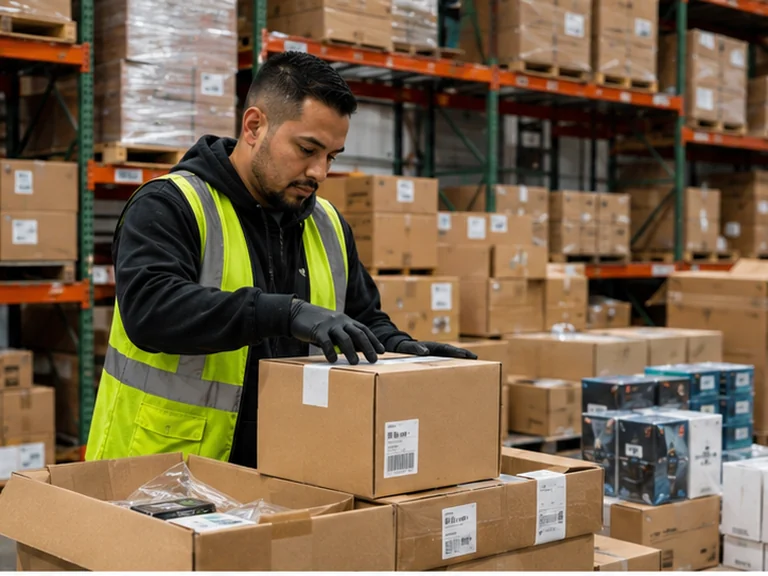
Case-packed Amazon inventory is common in wholesale. A seller may order 24 units of a single SKU per manufacturer case, and those cases may be sent to FBA with minimal handling if they are correct, clean, and aligned with the shipment plan. That can be efficient, but only if the case quantity, SKU, and carton configuration are verified.
The risk is assuming every case contains the expected quantity. A wholesale prep provider should confirm the units per case, verify the SKU on the case and inner units, and make sure the Amazon shipment workflow reflects how the inventory is actually packed. If the shipment is built as case-packed, the carton should not contain multiple SKUs unless the Amazon workflow and shipment instructions allow that configuration.
Mixed-SKU cartons require tighter receiving
Private-label shipments often arrive as one SKU per carton or one SKU per pallet. Wholesale shipments may arrive as mixed-SKU cartons, especially when orders come from distributors or when suppliers consolidate multiple POs. Mixed cartons make receiving more labor-intensive because the prep team must identify, count, and separate each SKU before deciding how it should be labeled, packed, and assigned to an FBA shipment.
This is where mistakes become expensive. A single carton may contain several similar variations, multipacks, colors, sizes, or versions of a product. If the prep process relies only on the outer carton label, units can be assigned to the wrong ASIN or shipped under the wrong FNSKU. Wholesale sellers should treat mixed-SKU receiving as a controlled process, not a quick pass-through.
Labeling and commingling decisions need extra attention
FNSKU labeling is one of the biggest differences in private label vs wholesale FBA prep. Private-label sellers often use a controlled barcode strategy and may have the factory apply labels or print product packaging with the correct identifiers. Wholesale sellers may receive products with existing manufacturer UPCs, retail price stickers, distributor labels, or packaging variations that create uncertainty during prep.
Amazon offers different barcode and inventory identification options depending on the product, listing, and seller settings. Some inventory may be eligible to use a manufacturer barcode, while other inventory may require an Amazon barcode such as an FNSKU. Because Amazon’s eligibility rules and Seller Central workflows can change, sellers should verify current Amazon Seller Central Help guidance before deciding whether to use stickered or manufacturer-barcode inventory.
From an operations standpoint, the key issue is control. Stickered inventory can help distinguish a seller’s units from other sellers’ units on the same ASIN, but it also adds prep steps and potential label-placement errors. Manufacturer-barcode inventory may reduce labeling work in eligible cases, but sellers should understand the risks and requirements before relying on it for wholesale products sourced from multiple suppliers.
If this is a central issue in your workflow, review a guide on how FNSKU labeling works before sending wholesale inventory to a prep center.
Documentation matters more in wholesale receiving
Wholesale sellers often need cleaner documentation than private-label sellers because inventory may come from several suppliers and may be tied to brand authorization, distributor records, invoice review, or account-health questions. A prep center does not replace the seller’s sourcing documentation, but it can support better inventory control by preserving receiving records and documenting discrepancies.
Useful wholesale receiving records may include:
- Supplier name and shipment reference.
- Purchase order number, invoice number, or packing slip reference.
- Cartons received and cartons expected.
- Units received by SKU, ASIN, UPC, or internal seller SKU.
- Shortages, overages, substitutions, or damaged goods.
- Photos of damaged cartons, incorrect items, or questionable packaging.
This is especially important when the seller is ordering from multiple distributors. If one supplier repeatedly ships wrong quantities or mixed cartons with poor labeling, the prep data gives the seller a basis for supplier correction, claims, or changing purchasing behavior.
Wholesale prep SOPs should be built around verification
A strong wholesale FBA prep standard operating procedure should reflect the reality that supplier shipments are not always uniform. The goal is not to add unnecessary touches. The goal is to verify the details that determine whether Amazon receives the correct product under the correct shipment and identifier.
Receiving checklist
The prep center should log each inbound shipment by supplier, tracking number, carton count, and related PO or shipment reference. For wholesale sellers, receiving against the invoice or packing slip is often just as important as receiving against the Amazon shipment plan because the shipment plan may not catch supplier-side errors.
SKU verification
Each SKU should be checked against the expected UPC, ASIN, product title, variation, size, color, model, or pack count. This step is especially important for categories with similar packaging or multiple versions of the same product. Wholesale prep should not assume that a supplier’s outer carton label is correct.
Damage and retail packaging inspection
Wholesale products often arrive in retail-ready packaging that will be evaluated by customers after Amazon ships the order. Torn boxes, crushed corners, broken seals, faded packaging, or missing accessories can create customer complaints even if the product itself is technically usable. The SOP should define what gets accepted, set aside, photographed, or returned to the seller for review.
Barcode and FNSKU decision
The SOP should state when the prep center applies FNSKU labels, when it leaves manufacturer barcodes exposed, and when it escalates the issue to the seller. It should also cover label placement, covering conflicting barcodes when required, and avoiding placement over product information, expiration dates, warnings, or packaging seams.
Bundling, polybagging, and product-specific prep
Wholesale sellers may create bundles, multipacks, or sets from branded products. That adds another layer of control: the prep team must confirm bundle components, apply any required bundle labeling, and make sure the finished unit matches the Amazon listing. Polybagging, bubble wrap, suffocation warnings, and expiration-date handling should be based on the current product and Amazon requirements, not a generic rule applied to every SKU.
Carton relabeling and shipment reconciliation
Before the shipment leaves for Amazon, the prep center should reconcile units, cartons, and labels against the final FBA shipment. For case-packed workflows, the carton quantity and SKU must match the shipment setup. For mixed-SKU workflows, the carton contents must be accurately reflected in the shipment details. This final control helps prevent receiving confusion once the inventory reaches Amazon.
How to evaluate a prep provider for wholesale Amazon prep

Not every FBA prep provider is built for wholesale workflows. Some are excellent at private-label carton forwarding and simple labeling, but less experienced with distributor shipments, inconsistent documentation, mixed cartons, or frequent SKU variation. When speaking with providers, focus on how they receive, verify, document, and escalate exceptions.
Ask whether the provider can handle wholesale case packs, mixed-SKU cartons, distributor packing slips, expiration tracking if applicable, FNSKU labeling, bundle assembly, and Amazon shipment creation support. Also ask how they report shortages, overages, damages, and barcode conflicts. The answer should be operationally specific, not just “yes, we do Amazon prep.”
For a more complete vetting process, use this guide to questions to ask an FBA prep center before committing inventory to a provider.
Common wholesale prep mistakes to avoid
Wholesale FBA prep problems usually come from assumptions. Sellers assume the distributor shipped the right quantity. Prep teams assume the label on the carton matches the units inside. Someone assumes that two similar retail packages are the same ASIN. Those assumptions are where mislabels, stranded inventory, shipment discrepancies, and customer complaints often begin.
The most common mistakes include sending case-packed inventory without confirming case quantity, mixing SKUs inside cartons that were planned as single-SKU cases, ignoring conflicting barcodes, failing to document supplier shortages, and treating wholesale retail packaging like private-label master cartons. A practical wholesale prep workflow slows down at the right checkpoints so inventory can move quickly after those checkpoints are cleared.
FAQ
How is wholesale FBA prep different from private label prep?
Wholesale FBA prep usually involves inventory from multiple brands or distributors, with more variation in labels, carton contents, packaging, and documentation. Private label prep is often more standardized because the seller controls the product, packaging, and production process.
What is case-packed Amazon inventory?
Case-packed Amazon inventory generally refers to cartons that contain multiple units of the same SKU in a consistent quantity. Wholesale sellers should confirm the units per case and make sure the Amazon shipment workflow matches the actual carton contents.
Do wholesale sellers need FNSKU labels?
It depends on the product, listing, seller settings, and current Amazon requirements. Some inventory may use manufacturer barcodes when eligible, while other inventory may require Amazon barcodes such as FNSKUs. Sellers should confirm current Seller Central guidance before shipping.
What should a wholesale seller ask an FBA prep center?
Ask whether the provider handles case packs, mixed-SKU cartons, distributor documentation, FNSKU labeling, bundle prep, expiration dates if applicable, shipment reconciliation, and discrepancy reporting. The provider should be able to explain its wholesale receiving workflow in detail.