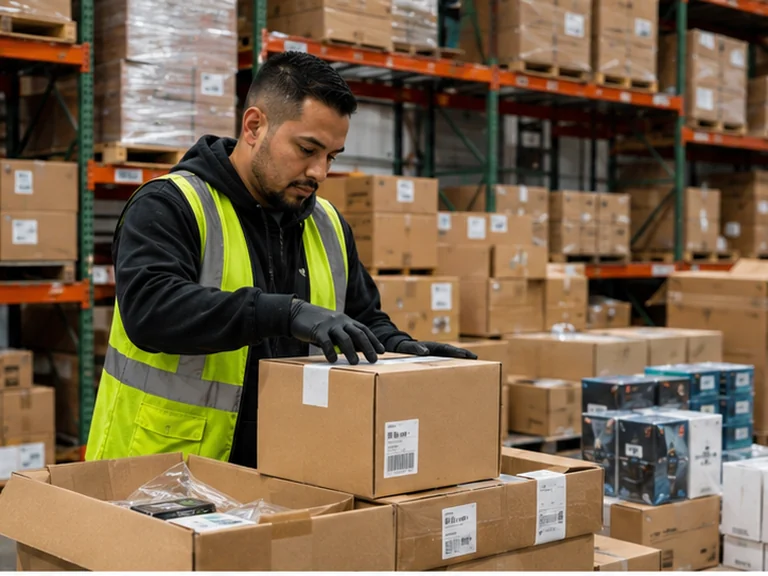
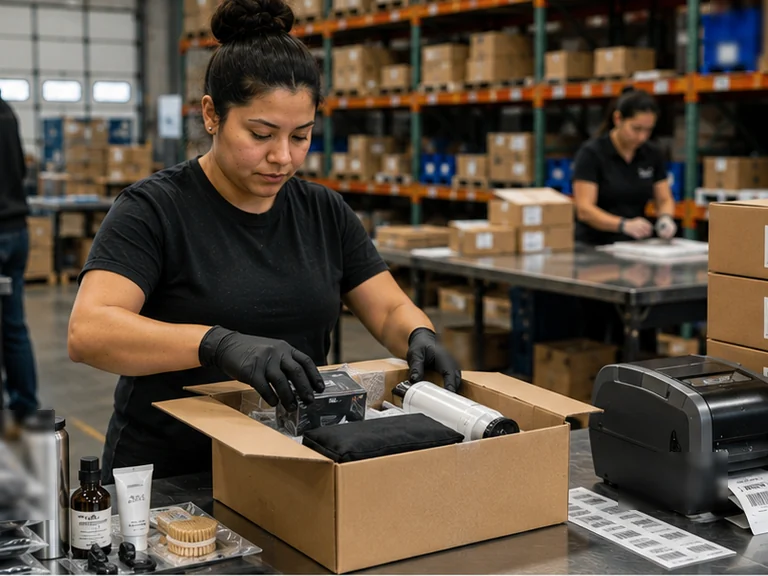
Bundles fail when the physical kit, product label, Amazon listing, and packaging do not match. For Amazon sellers, that mismatch can turn a profitable offer into stranded inventory, customer complaints, relabeling costs, or a slow back-and-forth between the seller, prep center, and fulfillment channel. Before you hand off assembly work, ask precise questions about how the prep center handles Amazon bundling and kitting, how they document each build, and how they verify that every finished unit is ready for FBA receiving.
What sellers should confirm first
Before using a prep center for bundles or kits, confirm four things: the exact components in each unit, the label applied to the finished sellable unit, the packaging method that keeps the unit together, and the work order process the prep center uses to prove the kit was assembled correctly. If any of those items are vague, the prep center may assemble something that looks right in the warehouse but does not match the Amazon listing or FBA receiving expectations.

Amazon sellers should also review current Amazon guidance inside Seller Central before creating or shipping bundles. Amazon terminology and enforcement can change, and the seller remains responsible for listing accuracy, product detail page compliance, barcode use, and FBA prep requirements. Amazon’s public Fulfillment by Amazon overview explains the role of FBA, but your operational rules should be verified against the current Seller Central help pages for your account and product category.
Bundle vs. kit: use the same language as your prep center
“Bundle” and “kit” are often used interchangeably in warehouse conversations, but sellers should define them clearly in writing. In Amazon operations, the critical question is not what the seller calls it. The critical question is what Amazon, the listing, the barcode, and the end customer recognize as the sellable unit.
What is an Amazon bundle?
A bundle is typically a set of complementary products sold together as one offer. For example, a seller may combine a kitchen tool, replacement heads, and a cleaning brush into one sellable unit. The customer buys one item, receives all components, and expects the product detail page to describe the full set accurately.
For FBA bundling prep, the prep center must know whether the bundle is a new sellable unit with its own FNSKU and packaging requirements. The individual component UPCs or manufacturer barcodes may need to be covered or made non-scannable so Amazon receives the finished bundle as one unit, not as several separate products.
What is a kit?
A kit is also a finished sellable unit made from multiple components, but the term is often used more broadly in fulfillment operations. A kit might be a subscription-style box, a promotional pack, a multipack, a replacement parts set, or a retail-ready assortment. An Amazon kitting service should be able to assemble the unit, protect the contents, label the finished package, and document the finished configuration.
The distinction matters because a prep center kitting project may involve more than simply putting items into a poly bag. It may include carton selection, inserts, expiration-date controls, lot tracking, photo verification, branded packaging, suffocation warnings, “sold as set” labels, and barcode placement.
Ask how the prep center controls the finished sellable unit
The most important operational question is simple: what exactly leaves the prep center as one sellable unit? The answer should be specific enough that your team, the prep center, and Amazon receiving would all identify the same finished product.
Ask the prep center to document the finished unit in a work order. That work order should include the SKU, FNSKU, product name, component list, quantities, packaging type, label requirements, and any special handling rules. If the finished unit includes two bottles, one accessory, one instruction card, and one insert, the work order should say exactly that.
Do not rely on product nicknames, shorthand, or screenshots alone. Screenshots can help, but they should support a written build specification. When there are multiple similar variations, such as color, size, scent, count, or language, the work order should make those variations unmistakable.
Sold-as-set labels: small label, big consequences
A sold as set label tells warehouse handlers that the package is intended to stay together as one unit. The label is especially important when a bundle contains multiple visible items or when the packaging could be mistaken for a master pack, case pack, or loose collection of units.
Ask whether the prep center supplies the sold as set label, where it will be placed, and whether it will remain visible after any poly bagging, shrink wrapping, bubble wrapping, or carton sealing. A label hidden under a shipping label, folded around an edge, or placed on a flap that can open during transit may not do its job.
Also ask how the prep center handles individual component barcodes. If Amazon is supposed to scan only the finished unit’s FNSKU, the prep center may need to cover or obscure scannable component barcodes. This is one reason sellers should understand FNSKU labeling before sending multi-component products into FBA prep.
Packaging questions that prevent separation and damage
Packaging is where many Amazon bundling and kitting problems start. The finished unit must stay together through prep, inbound transportation, Amazon receiving, storage, picking, packing, and customer delivery. Packaging that looks acceptable on a packing table may fail after compression, handling, or temperature changes.
Ask which packaging method is used
Common kitting methods include poly bagging, shrink wrapping, placing components in an inner carton, using a mailer box, or building a retail-ready branded package. Each method has tradeoffs. Poly bags are efficient for lightweight items, but they may not protect fragile components. Shrink wrap keeps items together but may not protect corners, caps, pumps, or blister packs. Inner cartons can improve protection but add material cost and dimensional weight.
Ask the prep center to explain the packaging choice for your specific product, not just their standard menu. A glass bottle bundle, a textile multipack, a cosmetics set, and an electronics accessory kit should not be treated the same way.
Ask about warnings and category-specific prep
If your kit uses poly bags, ask how the prep center handles suffocation warnings when applicable. If the kit contains liquids, powders, sharp items, fragile goods, batteries, expiration-dated products, or temperature-sensitive goods, ask how those requirements are handled before the work order is approved. The seller should verify current requirements in Seller Central and communicate those requirements to the prep center in writing.
Quality control should be built into the workflow
Quality control for prep center kitting should not be limited to “we check it.” Ask what is checked, when it is checked, who signs off, and what evidence is available if a problem appears later.
Useful QC steps may include inbound receiving counts, component inspection, barcode verification, photo verification of the first completed kit, spot checks during production, final count reconciliation, and exception reporting. For high-value or variation-heavy kits, ask whether the prep center can scan components or use a pick list to reduce assembly errors.
Make sure the prep center has a process for shortages and damaged components. If a kit requires three components and one component arrives short, the warehouse should not improvise. It should pause affected builds, report the shortage, and wait for seller approval.
Photos make kitting instructions harder to misunderstand
Photos are one of the simplest ways to reduce prep errors. Ask the prep center to keep reference photos for the approved finished unit, label placement, packaging orientation, and any barcode coverage required. For new bundle launches, request a first-article photo before the prep center completes the full run.
A first-article photo review is especially useful when the product has front/back orientation, multiple small parts, branded inserts, or similar-looking variations. It gives the seller a chance to catch mistakes before hundreds or thousands of units are assembled the wrong way.
Work orders: the operating document that protects both sides
A clear work order protects the seller and the prep center. It should function like the build recipe for the finished Amazon unit. If the prep center cannot show how instructions move from your request to the warehouse floor, that is a serious operational gap.
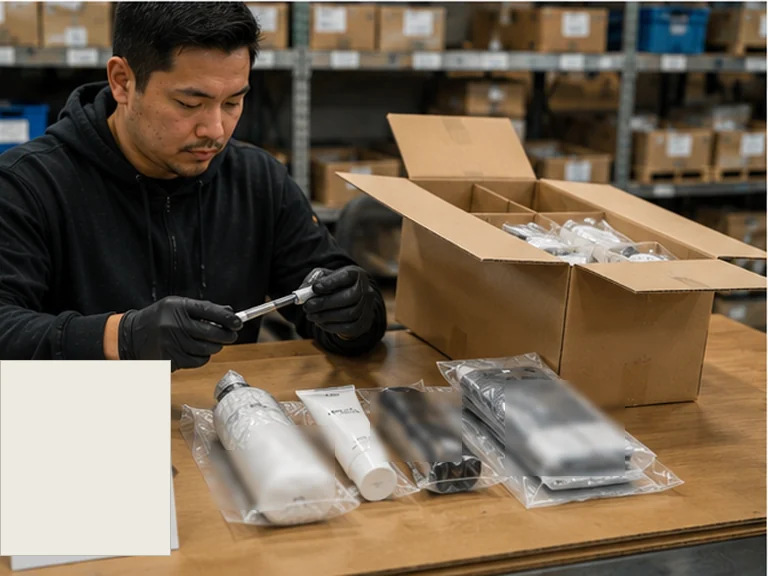
A practical kitting work order should include:
- Seller name, internal SKU, Amazon SKU, and FNSKU.
- Exact component names, quantities, and variation details.
- Required packaging materials and finished-unit presentation.
- Sold-as-set label placement and barcode coverage instructions.
- Inspection requirements and rejection rules.
- Photo requirements for first-article approval or final proof.
- Finished quantity target and overage/shortage handling.
- Special notes for expiration dates, lot numbers, fragility, or hazmat review when applicable.
For sellers comparing providers, this is where a specialized prep operation can differ from a general warehouse. Many e-commerce fulfillment 3PLs can ship orders, but Amazon FBA prep requires a tighter connection between product setup, labeling, packaging, and inbound shipment creation.
Pricing: understand what is included and what is extra
Kitting pricing can look inexpensive until you add the real labor and materials. Ask whether the quoted price is per finished kit, per component, per touch, per label, per poly bag, per carton, or per hour. Then ask which materials are included.
Typical cost drivers include the number of components, inspection time, barcode coverage, label printing, packaging materials, shrink wrapping, insert placement, fragile-item prep, photo documentation, and cartonization. A three-piece lightweight kit may be fast to build. A six-component kit with variation control, fragile materials, and photo confirmation will cost more because it takes more labor and has more failure points.
Also ask how the prep center charges for rework. If instructions were unclear, if components arrived mixed, or if Amazon requirements changed after the work began, who pays to rebuild, relabel, or repackage the units? These details are not always comfortable to discuss upfront, but they are much easier to resolve before inventory is on the warehouse floor.
Questions to ask before approving an Amazon kitting service
Use these questions during provider evaluation, onboarding, or before the first production run:
- How do you define a finished sellable unit for Amazon bundles and kits?
- Will you create or follow a written work order for each SKU?
- Can you apply FNSKU labels and sold-as-set labels to the finished unit?
- How do you prevent individual component barcodes from being scanned by mistake?
- What packaging options do you support for multi-component FBA units?
- Do you provide first-article photos before completing the full run?
- How do you handle shortages, damaged components, or mixed variations?
- What QC checks are standard, and what checks cost extra?
- How is kitting priced: per unit, per component, per hour, or by project?
- Can you support recurring builds if the bundle becomes a steady seller?
The goal is not to bury the prep center in paperwork. The goal is to make sure every finished unit matches the Amazon listing, the FNSKU, the package label, and the customer’s expectation.
FAQ
What should sellers confirm before using a prep center for bundles or kits?
Sellers should confirm the exact component list, finished-unit packaging, FNSKU labeling, sold-as-set label placement, barcode coverage, QC process, photo requirements, and pricing. These details should be documented in a work order before inventory is assembled.
Does every Amazon bundle need a sold-as-set label?
Many multi-component units should use a sold-as-set label so the items are not separated during handling. Sellers should verify current Amazon requirements for their product type and make sure the label is visible on the finished package.
Can a prep center create Amazon bundles from loose inventory?
Yes, many Amazon prep centers offer FBA bundling prep and kitting services. The seller still needs to provide accurate instructions, confirm the Amazon listing setup, and approve how the final unit will be packaged and labeled.
What is the biggest risk with prep center kitting?
The biggest risk is a mismatch between the physical kit and the Amazon offer. If the components, barcode, label, packaging, or listing do not align, units may be misreceived, stranded, returned, or complained about by customers.