
Imported Amazon inventory creates two separate decisions that often get treated as one: how the freight clears and moves, and whether the product is ready for Amazon’s fulfillment network. A freight forwarder is usually the better receiving point when the main problem is international transportation, customs coordination, port recovery, or inland delivery. An FBA prep center is usually the better receiving point when the main problem is carton condition, labeling, bundling, poly bagging, inspection, or routing inventory into Amazon correctly.
What’s the difference?
For most Amazon sellers, the right choice in a prep center vs freight forwarder decision depends on the first real risk after import. If the shipment still needs customs release, drayage, transloading, delivery appointment management, or freight consolidation, route it through a qualified freight forwarder or customs-capable logistics partner. If the inventory is legally entered, available for domestic delivery, and needs Amazon-specific preparation, route it to an FBA prep center.
Many importers use both: the forwarder manages the international and port-to-door movement, then delivers cartons or pallets to the prep center for FBA prep after import. That split is often cleaner than asking one provider to do work outside its core competency.
What each provider is actually responsible for
The biggest mistake sellers make is assuming “receiving inventory” means the same thing in every warehouse. A freight forwarder and a prep center may both accept cartons, but they are built for different jobs, different documents, and different failure points.
| Comparison point | Freight forwarder | FBA prep center |
|---|---|---|
| Primary role | Coordinates international freight, port handling, customs-related handoffs, drayage, and inland freight movement. | Inspects, labels, bundles, packs, and prepares units or cartons to meet Amazon receiving requirements. |
| Best receiving use case | Shipment is still moving through the import chain or needs freight control before final delivery. | Shipment is already imported and needs Amazon-ready preparation before inbounding to FBA. |
| Typical documents handled | Commercial invoice, packing list, bill of lading, arrival notice, delivery orders, customs-related coordination. | Amazon shipment plan details, FNSKU labels, carton labels, prep instructions, defect photos, receiving reports. |
| Inspection depth | Usually freight-level inspection: count, visible damage, pallet/carton condition. | Product-level or carton-level inspection, depending on service scope and seller instructions. |
| Amazon readiness | May not be equipped for FNSKU labeling, poly bags, warning labels, kitting, or Amazon carton compliance. | Usually designed around Amazon prep, labeling, cartonization, and shipment creation support. |
When a freight forwarder should receive the shipment first
A freight forwarder is usually the right first receiving or control point when the inventory is not yet truly “domestic.” That may include ocean containers arriving at a U.S. port, air cargo moving through an airport terminal, LCL freight that must be deconsolidated, or pallets that need inland delivery after release.
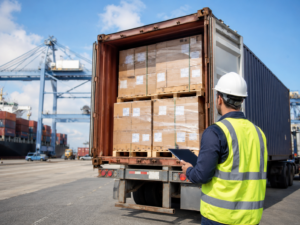
Forwarders are built around shipment flow. They coordinate with carriers, terminals, truckers, warehouses, customs brokers, and sometimes insurance or claims contacts. If the shipment has a tight free-time window, port storage risk, container detention exposure, or unclear handoff instructions, letting a qualified freight partner control the next move can reduce operational confusion.
That said, a freight forwarder is not automatically a licensed customs broker. Some forwarders have in-house brokerage; others coordinate with a separate broker. For customs basics, importers should review official guidance from U.S. Customs and Border Protection and confirm product-specific requirements with the right professional. If your shipment has classification, valuation, admissibility, duty, partner government agency, or importer-of-record questions, compare providers in the Customs Brokerage category and read our guide to Customs Broker vs Freight Forwarder.
Use the forwarder first when freight control is the issue
Forwarder-first routing often makes sense when the shipment is containerized, palletized, time-sensitive at the port, or moving through several transportation handoffs. It can also be the cleaner option when the seller needs freight repacking, transloading, storage before a domestic transfer, or delivery appointment coordination to a prep center.
For example, if a 20-foot container arrives at the port with mixed SKUs destined for multiple sales channels, the forwarder or its warehouse partner may transload the freight, separate the inventory by destination, and send only the Amazon-bound portion to a prep center. Asking a small prep center to receive a port container directly may create problems if it lacks dock capacity, container unloading labor, yard space, or drayage coordination.
When an FBA prep center should receive the shipment first
An FBA prep center is usually the better receiving point when the shipment has cleared the import movement stage and the remaining risk is Amazon readiness. Amazon’s fulfillment program has specific packaging, labeling, shipment creation, and inbound requirements that sellers need to follow. Sellers should confirm the current rules in Seller Central and Amazon’s official Fulfillment by Amazon resources because requirements can change by product type, marketplace, and shipment workflow.
Prep centers are useful when suppliers overseas do not apply Amazon-compliant labels, when cartons arrive with uncertain SKU mixes, or when product condition needs to be checked before Amazon receives it. This is where imported inventory inspection becomes important. A prep center can document shortages, visible defects, crushed cartons, incorrect labels, missing suffocation warnings, poor poly bagging, barcode conflicts, or units that do not match the shipment plan.
If your post-import requirements are mostly Amazon-specific, review providers in the Amazon FBA Prep category and see our related guide on FBA Prep for Imported Products.
Use the prep center first when product readiness is the issue
Prep-center-first routing may work when the overseas supplier ships cartons directly by air or LCL to the prep warehouse, and a separate customs broker or logistics provider has already arranged the legal entry and final delivery. It can also work when the prep center has established import receiving procedures, dock capacity, and clear instructions for delivery appointments.
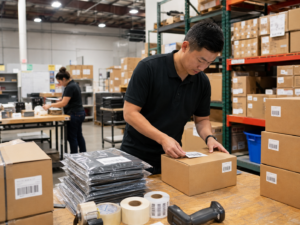
However, sellers should confirm that the prep center is willing and able to receive imported freight in the specific format being shipped. Small-parcel cartons are different from floor-loaded containers. Pallets are different from loose cartons. LCL deliveries may arrive with limited appointment flexibility. A prep center that handles 200 cartons by UPS may not be ready for a live container unload.
Cartons versus pallets: why the format changes the answer
The physical format of the shipment often decides the receiving strategy before the service type does.
Loose cartons are usually easier for prep centers to receive if carton counts are manageable and the delivery is scheduled. They can scan, sort, inspect, relabel, and re-carton for Amazon without heavy warehouse equipment. The main risk is labor cost: opening and inspecting hundreds of cartons can become expensive if the seller did not define the inspection scope in advance.
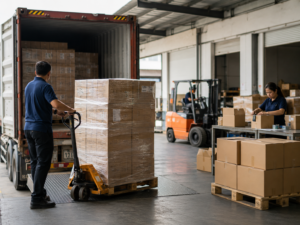
Palletized freight sits in the middle. Many prep centers can receive pallets, but sellers should verify dock height, liftgate requirements, pallet storage fees, pallet breakdown charges, and whether the center can re-palletize to Amazon’s current inbound standards. A freight forwarder may still be useful if the pallets need consolidation, LTL routing, or claims documentation before delivery.
Floor-loaded containers are often better controlled by a forwarder, transload warehouse, or 3PL with container unloading capabilities. Some prep centers can do it, but the seller needs confirmation on labor, unloading time, detention risk, carton count verification, overage/shortage reporting, and where the container can legally and safely be positioned.
A practical handoff workflow for imported Amazon inventory
The cleanest workflow separates import movement from Amazon readiness while keeping documentation connected.
- Before shipment: confirm product classification, importer details, commercial invoice, packing list, labeling plan, carton marks, and Amazon prep requirements.
- During international movement: have the forwarder and customs broker coordinate arrival, entry, release, and inland delivery requirements.
- At U.S. arrival: decide whether the freight goes to a forwarder warehouse, transload facility, prep center, or another domestic warehouse.
- At prep receiving: verify carton count, SKU mix, visible damage, label status, and any seller-approved inspection scope.
- Before FBA inbound: complete labeling, bundling, poly bagging, cartonization, shipment plan review, and carrier handoff.
The seller should own the written handoff instructions. Do not assume the supplier, forwarder, broker, and prep center all understand the same plan. Put the receiving address, contact details, appointment process, carton count, SKU list, inspection instructions, and escalation rules in writing before cargo reaches the U.S.
Cost and risk examples
The lower quoted receiving fee is not always the lower landed cost. A prep center may charge less per carton to receive inventory, but if a container sits because the facility cannot unload it quickly, detention or storage can erase the savings. A forwarder may charge more for a warehouse handoff, but it may prevent port delays and create a cleaner domestic transfer.
Consider three common examples:
- Air shipment of 40 cartons: If customs entry and final delivery are already handled, a prep center may be the best first destination because the freight is manageable and the main need is labeling and inspection.
- LCL shipment with mixed SKUs: A forwarder-controlled deconsolidation may be useful first, then the Amazon portion can move to the prep center with clearer carton counts and delivery instructions.
- Full container of Amazon inventory: A forwarder, transload warehouse, or container-capable 3PL is often the safer first stop unless the prep center has confirmed container receiving capabilities and detention controls.
The higher-risk areas are usually unclear responsibility, missed appointments, weak carton-level documentation, and discovering prep errors only after Amazon receives the inventory. The safest comparison is not simply freight forwarder vs prep center; it is which provider is accountable for each stage of the shipment.
Questions to verify before choosing the receiving point
Before assigning the shipment destination, ask each provider what they will and will not do. For a forwarder, confirm whether they provide customs brokerage directly or only coordinate with a broker, whether they can handle transloading or deconsolidation, and what happens if freight arrives damaged or short. For a prep center, confirm delivery formats accepted, dock hours, appointment rules, inspection options, labeling capacity, storage charges, and how quickly they can process inventory after receiving.
For high-value or regulated products, build in extra verification. Product categories such as food, cosmetics, medical devices, electronics, children’s products, batteries, or goods subject to partner agency review may involve requirements beyond ordinary FBA prep. Do not rely on a prep center to resolve import admissibility or compliance questions unless it explicitly offers that expertise through qualified partners.
FAQ
Should imported Amazon inventory go directly to a prep center?
It can, but only if customs release, final-mile delivery, and receiving instructions are already handled and the prep center can accept the shipment format. Direct-to-prep works best for manageable carton or pallet shipments where Amazon preparation is the main remaining task.
Can a freight forwarder do FBA prep?
Some forwarders or affiliated warehouses offer labeling, palletizing, or basic prep, but not all are built for detailed Amazon requirements. Confirm the exact services offered, including FNSKU labeling, carton labeling, inspection, bundling, poly bagging, and shipment plan support.
Who should inspect imported inventory before Amazon receives it?
A prep center is usually better suited for product-level or SKU-level inspection. A forwarder may document freight condition, carton count, and visible damage, but detailed retail readiness checks usually require a prep workflow and seller-approved inspection criteria.
Do I still need a customs broker if I use a prep center?
Often, yes. A prep center handles Amazon readiness, not necessarily customs entry or import compliance. If your shipment requires formal entry, classification support, duty handling, or agency-specific review, work with a qualified customs broker or customs-capable logistics provider.
