
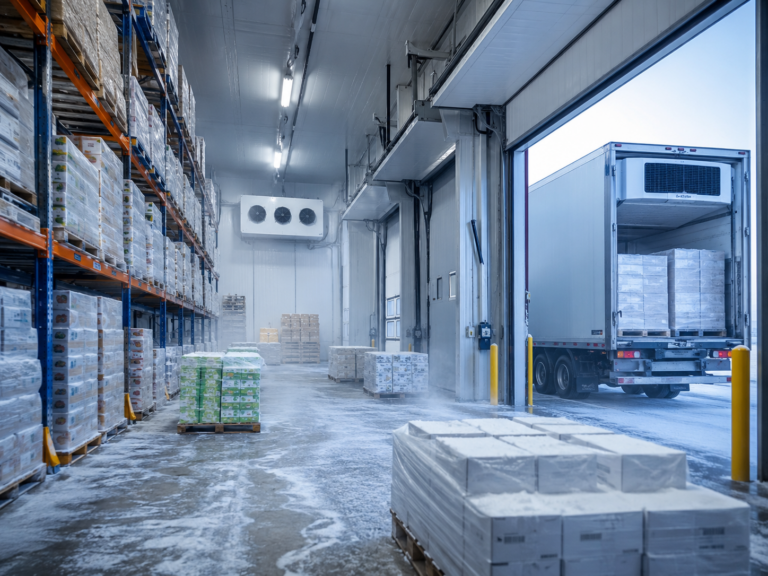
Choosing a cold storage provider is about more than finding available warehouse space. For food brands, importers, distributors, manufacturers, and shippers, cold storage affects product quality, inventory accuracy, delivery timing, and customer trust.
The wrong provider can create serious problems. Poor temperature control, limited dock access, weak inventory tracking, unclear pricing, or slow communication can lead to delays, spoiled product, extra costs, and frustrated customers.
The right provider should be able to explain its temperature zones, receiving process, inventory controls, facility standards, and outbound shipping support in clear language. You do not need to be a cold chain expert to make a good decision, but you do need to know what to compare.
Here is how to choose a cold storage provider for your products.
Start With Your Temperature Requirements
Cold storage is not one-size-fits-all. Different products need different temperature ranges, handling procedures, and storage environments.
Before contacting providers, clarify what type of temperature-controlled storage you need.
Common options include:
- Frozen storage
- Refrigerated storage
- Chilled storage
- Controlled ambient storage
- Food-grade cold storage
- Short-term overflow storage
- Cross-dock support
- Distribution support
A provider that handles frozen food may not be the right fit for chilled beverages, fresh produce, confectionery, seafood, ingredients, or other sensitive goods.
Ask each provider what temperature zones they offer and whether those zones match your product requirements.
Ask What Products They Commonly Handle
Experience matters in cold storage. A warehouse that regularly handles frozen proteins may operate differently from one that stores beverages, produce, dairy, seafood, packaged food, floral products, or imported ingredients.
Ask what types of products the provider commonly receives, stores, and ships.
Helpful questions include:
- Do you handle food-grade products?
- Do you store frozen, refrigerated, or chilled goods?
- Do you work with importers?
- Do you serve foodservice, retail, wholesale, or e-commerce customers?
- Are there products you do not accept?
- Do you support seasonal or overflow storage?
A good cold storage provider should understand your product category and the handling issues that come with it.
Compare Temperature Monitoring and Backup Systems
Temperature monitoring is one of the most important parts of cold storage. Buyers should understand how the provider monitors temperatures, records issues, and responds when something goes wrong.
Ask:
- How are temperatures monitored?
- Is monitoring continuous or manual?
- Are temperature records available?
- Who is alerted if temperatures move outside the target range?
- What backup systems are in place?
- What happens during power interruptions?
- How are temperature concerns reported to customers?
You do not need an overly technical answer. You do need confidence that the provider has a reliable process and can explain it clearly.
Review the Receiving Process
Receiving is a critical step in cold storage. Temperature-sensitive freight can be affected by appointment delays, long dwell times, slow check-in, or poor dock procedures.
Ask how inbound freight is scheduled and received.
Important questions include:
- Do you require delivery appointments?
- Can you receive LTL, full truckload, containers, or parcel shipments?
- How quickly is product moved into temperature-controlled space?
- Do you inspect inbound freight for visible damage?
- Do you record product or trailer temperatures at receiving?
- How are damages, shortages, or discrepancies reported?
- Can you handle palletized freight?
A strong receiving process helps protect product condition and gives buyers better visibility when freight arrives.
Understand Inventory Tracking
Cold storage is not just about temperature. Inventory accuracy is just as important.
If your products are not tracked correctly, you may run into stock discrepancies, expired inventory, rotation issues, shipment errors, and customer service problems.
Ask how the provider manages:
- SKU tracking
- Lot numbers
- Expiration dates
- First-in, first-out rotation
- Pallet counts
- Case picking
- Order status
- Inventory reporting
For food brands and importers, lot tracking and expiration-date management can be especially important. If the provider cannot clearly explain how inventory is tracked, that may be a warning sign.
Ask About Outbound Distribution
Some buyers only need storage. Others need cold storage plus distribution, retail replenishment, foodservice delivery, e-commerce fulfillment, or refrigerated transportation coordination.
Ask what happens after inventory is stored.
For example:
- Can you ship pallets, cases, or individual orders?
- Do you support retail distribution?
- Can you coordinate refrigerated transportation?
- Do you offer cross-docking?
- Can you handle recurring outbound orders?
- Do you work with parcel, LTL, and truckload carriers?
- Can you support regional or national distribution?
If you need both cold storage and cold transport, it may be helpful to choose a provider that can coordinate with refrigerated carriers or connect with transportation partners.
Consider Location Carefully
Location can affect cost, transit time, product condition, and service flexibility.
A cold storage warehouse near a port may be useful for imported food products. A provider near major highways may be better for regional or national distribution. A facility close to your production site, suppliers, customers, or retail partners may reduce handling time and transportation costs.
Major logistics hubs such as Houston, Los Angeles, Dallas, Miami, Chicago, Atlanta, Savannah, and New Jersey often matter because they connect ports, highways, rail, warehousing, and distribution networks.
Location should support your actual freight flow. Do not choose a facility only because it is available. Choose one that fits how your products move.
Compare Pricing Beyond the Storage Rate
Cold storage pricing can vary based on temperature range, pallet count, product type, storage duration, order volume, and value-added services.
Ask providers to explain all possible charges before you send inventory.
Common cost areas may include:
- Inbound handling
- Monthly storage
- Pallet storage
- Case picking
- Order processing
- Cross-docking
- Blast freezing, if available
- Labeling or repacking
- Outbound handling
- Administrative fees
Do not compare providers only by the monthly storage rate. Handling, order activity, and service fees can significantly affect the total cost.
What to Look for in a Cold Storage Warehouse
When comparing cold storage companies, look for more than capacity.
Strong providers usually offer:
- Clear temperature capabilities
- Organized receiving procedures
- Reliable inventory reporting
- Lot and expiration tracking when needed
- Clean communication
- Defined pricing
- Appropriate product experience
- Outbound distribution support
- Ability to coordinate with cold transport providers
The best fit is not always the biggest warehouse or the lowest quoted price. The best fit is the provider that can protect your product, communicate clearly, and support the way your supply chain actually works.
Common Mistakes to Avoid
One common mistake is choosing a cold storage provider based only on available space. Space matters, but process matters more.
Another mistake is failing to confirm temperature requirements in writing. Always make sure the provider understands your product’s required storage range.
Buyers should also avoid vague pricing. If a quote does not explain receiving, storage, handling, and outbound costs, ask for clarification.
Finally, do not assume cold storage and cold transport are the same service. You may need both, but they solve different parts of the cold chain.
FAQ
How do I choose a cold storage provider?
To choose a cold storage provider, compare temperature zones, product experience, receiving process, inventory tracking, outbound distribution support, location, communication, and pricing structure.
What should I look for in a cold storage warehouse?
Look for reliable temperature control, clear inventory tracking, food-grade handling experience, organized receiving, lot tracking when needed, transparent pricing, and strong communication.
What types of products need cold storage?
Food, beverages, frozen goods, seafood, dairy, produce, ingredients, floral products, and other temperature-sensitive products may require cold storage.
Is cold storage the same as cold transport?
No. Cold storage refers to temperature-controlled warehousing. Cold transport refers to moving temperature-sensitive freight using refrigerated or temperature-controlled vehicles.
Why does location matter for cold storage?
Location can affect inbound freight cost, delivery speed, access to ports or highways, outbound distribution, and the ability to serve customers efficiently.
Find Cold Storage Providers on National Freight Hub
Learning how to choose a cold storage provider can help you avoid preventable problems and build a more reliable cold chain.
Use National Freight Hub to browse cold storage providers, compare temperature-controlled warehousing capabilities, and find companies that fit your product, location, and distribution needs.
